3 Urgent tools for migraine prodrome symptoms to use ASAP

The migraine prodrome is the absolute most important phase of a migraine, in terms of treatment.

The earlier a migraine can be recognized the more likely we will be able to abort or lessen an attack.

In this article we will be talking about 3 urgent tools that you need to use ASAP for full effectiveness.

Recognizing your migraines prodrome will be your key to it.

What is a prodrome? / Migraine prodrome definition

The very first signs of a migraine, long before the attack phase, (or with migraine with aura) even the aural phase, is the migraine prodrome.

These are thought of as premonitory symptoms because they are slight and give you the “premonition” that something is off or wrong.

The International Headache Society defines a prodrome as:

“Prodrome: A symptomatic phase, lasting up to 48 hours, occurring before the onset of pain in migraine without aura or before the aura in migraine with aura. Among the common prodromal symptoms are fatigue, elated or depressed mood, unusual hunger and cravings for certain foods.”

A prodrome does not happen in everyone but is estimated to occur between 30% to 80% of migraine sufferers.

Migraine prodrome symptoms

It’s interesting to note that migraine prodrome symptoms are very similar to the regular ups and downs of the day that most people experience such as food cravings so we may actually be going in and out of the premonitory migraine phase regularly with it only actually resulting in a migraine occasionally.

There are many symptoms that the migraine is coming and many of them are the result of the damage done to the brain that cause migraines and the subsequent migraines effort to repair and protect the brain from damage.

The most common symptoms are:

– Fatigue

– Difficulty concentrating

– Neck or muscle stiffness

– Sensitivity to light, sound and smell(photophobia, phonophobia, hyperosmia)

– Nausea

– Blurred vision

– Yawning

– Becoming pale

– Irritability

– Depression

– Frequent urination

– Loss of words/difficulty speaking(aphasia)

– Depression

– Elation

It’s easy to see how some of these symptoms can simply be brushed off and thought of as nothing more than a regular occurrence.

Warning: We can often end up blaming lights, smells and sounds for our migraine attacks when in reality it was the prodromal phase that increased our sensitivity to the smells and we mistakenly thought the sensitivity was a trigger.

This isn’t always the case but using methods to prevent sensitivities like removing bad foods can go a long way to prevent environmental sensitivities.

How long does a migraine prodrome last?

A migraine prodrome usually lasts from an hour or two to one or two days and this can include the entire variety of symptoms but separate from any distinct aural symptoms like a scintillating scotoma.

But let’s be honest, the 4 categories of a migraine:

Prodrome => Aura => Attack => Postdrome

Are only arbitrary rules we created to understand migraine and in reality these often all blend together.

Migraine prodrome without headache

Because there are no “rules” when it comes to migraines, we can commonly end up with a prodrome that never leads to a headache.

Or a prodrome that progresses into an aura only to have the aura disappear and a headache to never appear.

Or even to have the entire three other phases with a prodrome, aura and postdrome… But with no headache.

It’s completely reasonable and as you get better at learning your body’s signals and knowing exactly what it needs from reading our blogs, you will get better at stopping the progression in its tracks.

The standard migraine prodrome treatment approach is to take your abortive medication as soon as you think a migraine may be coming on.

But this is tricky because what if your prodrome would’ve never turned into a full on attack… What a waste.

Plus, the side effects of the medication might incapacitate you even longer than the migraine would’ve.

This is why we use natural techniques that are safe, effective and will only benefit you.

If it turns into a full blown migraine or not.

3 Urgent tools for migraine prodrome that you have to use ASAP

We have to change our thinking and understand migraine as a protective, helpful mechanism for our bodies.

Migraine doesn’t seem to be what is damaging the migraine sufferers brain.

In reality and according to this study it may actually be protecting our brains.

And it makes sense…

Just like our pain reflex.

When something causes us pain, it brings our attention to it and triggers our reflex to get out of harm’s way.

We can think of migraines this way too.

If our brain is getting hurt by something like oxidative stress, excitotoxicity, mitochondrial dysfunction or inflammation…

Then a migraine is the perfect way for our body to get our attention and make us stop doing what we’re doing.

Does a migraine make you stop doing what you’re doing?

But this is a very primal and old reflex so we have to be the smart detectives and figure out what’s going on.

Read our articles on the foundation principles, what to do about complex and complicated migraines and what to do when a headache won’t go away by clicking these links.

In the meantime, while we are healing, we need to be on top of a progressing migraine and stop it as soon as possible.

Here are three ways to stop some contributors to migraines that you have to try in the prodromal phase ASAP.

1. The antiinflammatory 1-2 punch


Oxidation, inflammation and chemical stress is a big and bad problem for the brain.

Utilizing turmeric and ginger together, as soon as you feel a prodrome is an awesome way to give your body an anti inflammatory and pain relieving boost.

Some even report ginger aborts their migraines.

But you want to make sure you get enough of each, and an easy way is to take capsule versions of turmeric curcumin and dried ginger powder.

Usually I get reports that 250mg-500mg of dried ginger powder is a great place to start and this study found 250mg of ginger was “just as effective as sumatriptan.”

Turmeric is used in many studies for other conditions between 400-600 mg in a dried powder.

It’s important to get turmeric as well as its active ingredient turmeric curcumin and piperene which makes it absorb and function much better. A combination of these three makes a great turmeric supplement in capsule form.

But everyone is different and dosage will widely vary based on your individuality. Always check with your doctor before making any changes and look for interactions with medications.

2. The pattern breaker


We all have a pattern.

Call this our migraine pattern.

Whether it be a food pattern, stress pattern, emotional pattern, movement pattern etc…

And this pattern is triggering our migraines.

We have to find it and stop it.

But we can’t always be introspective and objective on our own lives so we need a way to break free from ourselves.

This is where the pattern breaker comes in.(Plus its golden for killing stress hormones)

It goes like this:

Sit down in a quiet dim lit space that’s comfortable and helps you hold good posture.

Stop all your thoughts and bring your focus to yourself.

Now breathe.

Breathe slow, deep diaphragmatic breaths that are 4-6 seconds inhaling and 4-6 seconds exhaling.

Once you have your breathing pattern practised and on auto then transition into the next step but continue the breathing throughout.

Nice and slow.

Start at your feet.

Relax your feet, loosen any tension and lightly shake them out.

Then move on to your calves, relax them, let go and release any tension.

Then your thighs

Then your butt

Then your lower back

Then upper back

Then start from your hands

Work to your arms and finally into your shoulders

Focus on your shoulders, neck and head, continue breathing and relax them.

Purposely focus on relaxing , loosening and letting go of any built up stress in them.

Breathe and reconnect yourself, you got this.

Remember who you are and sit in your power.

Relax and let go, if only for right now and for yourself.

Continue breathing until you can honestly say you’ve dropped the stress you’re holding on to and can take a look at what you are doing, objectively.

If you can do this as soon as you feel anything prodromal, you have a great chance to recognize and break the pattern.

3. The hot and the cold


This one’s tough and not for the faint of heart. If you’ve never done a cold plunge then do not use full cold unless you are comfortable with it.

But it should be slightly uncomfortable because this switching between temperatures will cause your heart rate to speed up and your brain to fire altogether, helping to build new and stronger pathways that aren’t pain pathways.

Start with a fairly warm shower.

Work your way up and make sure your whole body is feeling nice and warm so that your blood vessels are dilating.

Then flip it to cold. But use a preset cold that you know you can deal with.

Not lukewarm.

This has to be quite cool and will cause a change in the way blood is circulating through your body called the hunters reflex.

This will cause your lymphatic system to drain, your heart to pump more nutrients to your brain, your breathing to increase and bring in more oxygen, your blood vessels to dilate to warm you up and your brain to fire simultaneously to get your body’s functioning up to par with the situation.

It’s not easy, but it’s an easy way to combat the overly comfortable, air conditioned, sedentary lives we live and help counter some of the inflammation running rampant in the regular migraine brain.

Then finish off with some warm again.

As always, this is not medical advice and you should consult your doctor before making any changes to your lifestyle.

These techniques are amazing ways to implement natural solutions into a world that’s become so unnatural and caused half of all people to have a chronic health condition and over 1 billion people to suffer from migraine worldwide.

I have created a special presentation entitled the 3 Linchpin areas that destroy hormones and leave your brain in pain which you can see here.

In it I cover WHY it is that the brain becomes overloaded and what keeps our brain and hormones from coming back into balance.

This is an indepth presentation which will teach you more about the causes of brain pain and why it is not recovering properly than anywhere else on the web.

To see the webinar click here.

How do you experience your prodrome? What do you do for it?

Share this article with someone else with migraines that may benefit.


7 Crucial questions for waking up with tension headaches

Few things are more annoying than starting your day off with a tension headache.

Especially if you think it’s going to grow or become a migraine.

I used to deal with migraines and tension headaches at all times of the day.

But there was a common thread to the days it was just a tension headache and not a migraine.

In this article, I’m going to talk about 7 questions you can use to troubleshoot why you’re waking up with tension headaches and what to do about it. This will also be applicable to waking up with migraines.

1. Are blood sugar drops causing the aggravations?

Blood sugar is a very tricky thing for the migraine brain and needs to be monitored.

If our metabolism is compromised and we are reliant on steady blood sugar levels then having the huge span of time between dinner’s meal and breakfast’s meal may be too much for our brain to handle.

This means we need to opt in to slow releasing foods that will keep blood sugar stable throughout the night and won’t cause our blood sugar to spike or drop in the middle of it.

When our blood sugar drops, our body will release cortisol to bring more sugar into the blood so that we don’t fall into a coma or die.

But cortisol is one of our stress hormones and causes the release of energy that can interrupt our sleep phases and lead to a restless night that may trigger us.

This means we need meals higher in slow carbohydrates, with enough protein and a fair share of fat to feed our brains throughout the night.

  • Yams are great sources of carbohydrates
  • Nuts like cashews and walnuts are great brain fats
  • and meats like salmon belly provide enough protein to keep digestion slow and enough healthy fats to feed our brains.

2. Are you losing more water than you can afford during sleep?

Water is one of the most essential nutrients for all life and keeps our brain cool and the electrical impulses inside of it functioning properly.

Sleep is essentially a giant detoxification process and our brain can shrink 20% during it to squeeze out all the waste products built up throughout the day.

This means it needs lots of water to fuel its ability to clean itself out.

Mouth breathers are even more so affected because they have a greater loss of fluids during sleep escaping through their mouth.

This means we need to do a really good job of hydrating throughout the day. Drinking pure clean water with enough minerals in it makes sure that it actually gets absorbed into our tissues and not just urinated out.

Pro tip: Add a little sea salt to your water throughout the day and if you have problems with getting up to urinate at night then add even more sea salt to the last water of the day.

This will keep water inside you instead of trying to get out.

3. Parasites?

Did you know most parasites have the opposite sleep cycle to us and are most active at night?

While we are trying to rest and digest, they are awake and making their rounds throughout our body, creating toxic waste products and taking our nutrients.

If they are present in high enough amounts they can actually create a cortisol reaction in our bodies all night long because our body has to work to fight them off and keep them controlled.

This means our sleep is getting chopped in half and it’s going to eat away at our body’s ability to repair from the day’s stresses.

If our body isn’t repairing properly, we are set up for musculoskeletal issues, mineral deficiencies, and tension that built up throughout the day, not being dropped while we sleep.

If you are experiencing digestive issues, skin issues or chronic insomnia then make sure to consult a specialist about parasites.

4. Are you going through a caffeine rebound while you sleep?

Caffeine is one of our favorite drugs and for good reason.

It gives us energy and keeps us awake.

It also makes some medications work faster and can save us from a full on attack.

But this amazing substance is double-sided.

It can also contribute to rebounds.

If we aren’t careful we can actually start going into caffeine withdrawal while we sleep.

As our body starts to crave the caffeine we can go through a number of symptoms like:

– Headaches

– Anxiety

– Fatigue

– Insomnia

And so much more.

It’s a tricky game with caffeine so we need to make sure we either avoid it completely or have enough to get us through the night.

It’s also important to remember that caffeine has a half-life of 6 hours and that it artificially increases our stress hormones which can push back our sleep cycles.

5. Are your circadian rhythms synced up?

Circadian rhythms are like the body’s biological clock that regulates all our hormones and cells so that they know when to wake up and when to go to sleep.

If we aren’t getting enough direct sunlight or stare at screens all day our body can begin thinking it’s daytime when it’s actually not.

This will shift our entire circadian rhythm and our hormones may start going up when they need to go down and down when they need to go up.

If our body wakes up while we are sleeping we can develop the same form of headaches that come on when we’ve had too much sleep or woken up and then gone back to sleep.

Bad circadian rhythms mean bad headaches.

Wind down before bed, cut blue light from screens 2 hours before bed and make sure you get direct sunlight into your eyes during the day.

See the foundation principles to learn more about sleep’s effect on headaches and migraines.

6. Do you sleep in too long or with 7. Bad sleep posture?

It’s fairly common to know that sleeping in too long can give us that funny morning headache but there is also proper sleep ergonomics that can either contribute to a restful sleep…

Or contribute to muscular tension in our backs and neck that can lead to trigger.

Both sleeping in too long, too late and too short can be aggravators for tension issues.

Ask yourself when you wake up:

Did I sleep in too much or too little?

Was it a bad time to go to sleep or wake up?

See our article on cervicogenic headaches where the headaches are caused by shoulder or neck problems.

Make sure you:

– Have the right mattress for your body type(soft or hard)

– Have a pillow that supports your head and neck

– Use towels under your lumbar back and neck to give it more support

– When on your side use a pillow between your legs to prevent your pelvis from tilting and straining your back

And get a sleep study done!

It’s one of the first things to do when sleep seems to trigger us and can give us some insight into what’s going on but asking yourself the above questions and resolving deeper issues can give your body the proper rest it needs.

When our body can get the proper sleep, it can give us massive resilience towards all types of migraines and headaches.

If you are trying to understand your headaches then make sure to join the Migraine Professional community where we talk about everything headache and migraine-related and how to get healthy again here.

See our video on 5 quick and easy tips for tension headaches here:

Let me know below if you experience any tension headaches and what you do for them below.

Remember to share with others who may find this information helpful.

1 Amazing barometric pressure migraines and headaches remedy

1 Amazing barometric pressure migraines and headaches remedy

Barometric pressure headaches are a huge problem because they can be so unpredictable and strike at the worst times.

The graph below shows major triggers leading to migraines among U.S. patients as of 2016:

Changes in weather and barometric pressure are a huge problem and go together.

In this article we will understand what causes barometric pressure headaches and what we can do about it.

Definition / What is a barometric pressure headache?

Barometric pressure is also known as atmospheric pressure and is the amount of air-pressure-based-force that our environment is exerting on our bodies.

A barometric pressure headache is when changes in the environment cause the barometric pressure to drop or rise.

This change causes our body to have to adapt and alter its internal pressure.

If our trigger levels are high or we have congestion or a high amount of mucus from eating mucus forming foods then our body does not easily adapt to these changes.

This causes nerves to have added pressure on them that can then result in an inflammatory reaction that may create a headache or even trigger a migraine.

For example: When inside an airplane that is taking off and climbing rapidly there is a very sudden change in barometric pressure. Your body adapts to this by changing its internal pressure and this usually ends in our ears popping to balance out.

How do weather changes cause barometric pressure to raise or drop?

Generally, when the sky is clear and sunny there is higher barometric pressure and when the sky is cloudy and moist then there is low barometric pressure.

But this isn’t always the case.

When the sun is out it’s warmer so air is expanding and this causes more pressure.

But when enough of that heat has caused hot water to evaporate and that hot air to rise high enough to cool down, this causes clouds to form and lowers pressure.

It’s not as simple as this but this is a general understanding… That’s why we have meteorologists.

Can barometric pressure cause migraines and headaches?

Barometric pressure is a completely normal event and we have experienced it for millions of years throughout our evolution.

It’s even reasonable to assume that knowing when the weather was changing would have provided an additional adaptation to survival because we would then have some time to prepare before any storms hit.

It’s usually the case that barometric pressure will change 5-6 hours before a storm comes but some very sensitive migraine and headache sufferers can feel it up to a day or two prior.

As the barometric pressure drops and the pressure in the atmosphere around us becomes low, our body has to adapt.

This causes many different changes in our bodies including changing the pressure in our ears and sinuses.

If our ears or sinuses have mucus or blockages, this makes the problem much worse because the air in them will try to expand, pressing on nerves.

This means we need to choose cleaner diets that are less mucus forming.

According to mother nature network there are also changes in blood pressure, blood sugar and event joint pain when the barometric pressure changes.

It’s completely reasonable to suspect that if blood pressure, blood sugar and joint pain are all adversely affected, then the body is going through big changes during lowering or heightening barometric pressure.

We know the migraine brain is one that does not like change and these are not small changes if they can affect these factors.

This study found that “sales of loxoprofen, which can represent the onset and aggravation of headache, significantly increased with worsening weather conditions.”

Then this study in 2004 found “Of the 77 subjects in the study, 39 (50.6%), were found to be sensitive to weather.”

Even flare ups of rheumatic conditions like arthritis, joint pain and low back pain as well as mood changes are all affected by barometric pressure and weather.

Remember when a storm was coming and grandma would say “I can feel it in my bones.”

What is high / low / normal barometric pressure?

This study from 2011 found that “The frequency of migraine increased when the difference in barometric pressure from the day the headache occurred to the day after was lower by more than 5 hPa, and decreased when the difference in barometric pressure from the day the headache occurred to 2 days later was higher by more than 5 hPa.”

So it’s not so much the increase as it is the decrease in barometric pressure that does us wrong.

Tools for barometric pressure headaches

There are some amazing apps available to give you warnings on barometric pressure so that you can plan and prepare for any problems that may come.

You can see the two sites for the best apps for barometric pressure for Android or Apple here.

Here is a great article on barometric pressure headaches with a list of cities that have the least barometric pressure variation.

Understanding barometric pressure headaches

Barometric pressure changes are completely normal and it’s not until changes happen in your body that it is unable to deal with them.

There is a big shift that happens in the entire body when the amount of pressure on it changes.

Every fluid and gas in our bodies has to adjust to compensate for the change.

But this is absolutely normal and from an evolutionary perspective we have dealt with this for millions of years and evolved and adapted with it.

The problem starts when our trigger levels are too high and our threshold too low.

When our body is taken out of its natural context, this puts stress on the body.

Then, when we add a bunch of stress from our jobs, our work, our relationships, our food etc…

Our body’s ability to adapt starts to break down.

This is why problems like PMS are so common nowadays where they were never before outside of some rare circumstances.

In humans natural and evolutionary habitat, we would not survive if we had barometric pressure headaches and migraines that would incapacitate us and we simply would not have been able to reproduce and carry our genes on.

So our inability to adapt to these problems is a much more common occurrence today than it ever was and for good reason.

Watch this video on how barometric pressure affects the neck and contribute to pain.

Here is what’s causing the problem then I’ll explain whats happening after.

When we:

  • Eat foods that aren’t digested properly or that are wrong for our body
  • When we have chronic infections
  • When we have a suppressed immune system from constant sugar intake
  • When we have a compromised digestive system
  • When we have constantly high stress that our body cannot adapt to

Our body starts to create lots of waste products that it cannot get rid of.

We are always creating waste as natural byproducts of cellular metabolism, that’s a given.

But in our regular habitat we are always bringing in a lot of nutrient dense foods and supporting the systems that are clearing out and detoxifying that waste.

Our natural diet that we evolved with for millions of years is unprocessed and this leaves nutrients intact for our gut bacteria to thrive off of and create the nutrients we need to build really strong brain cells and clear out waste without a problem.

This means our gut, our liver, our kidneys, our skin and our lungs are always functioning optimally and removing the waste.

We are also detoxifying on a regular basis.

In our natural habitat:

We are in the sun which is regulating our circadian rhythms and optimizing sleep cycles so that our stress hormones drop at night and we can rest and digest.

We are sweating a lot because we rely on physical activity to live and play which means waste is constantly being flushed out of our skin.

We are moving/exercising in habitats with clean air which means our heart rate is high and our lungs are pumping which is constantly bringing in oxygen and expelling waste through our lungs.

We are using vigorous muscular contractions and this is causing our lymphatic system to be squeezed and drained into our detoxification organs. (Our lymphatic system is the waste removal system but doesn’t have its own pump like the blood does with the heart because it relies on movement and breathing deeply.)

We are eating unprocessed food which are full of vitamins and minerals which keep our system running optimally.

These foods are unprocessed and non pasteurized which means they are full of enzymes which help to break them down and prevent the body from reacting to them.

They are also full of high quality fibres that feed our gut bacteria so that we don’t develop gut infections or leaky gut + they are also giving our intestines a good scrub to remove the waste we are creating throughout the day.

There’s so many more pieces that I could go on about that contribute to the body not getting its needs met and this is why I created the 10 steps program.

When these needs aren’t met, our systems don’t function properly.

This sets us up for problems and if any little nudge comes along like pregnancy, emotional stress or an illness…

A cascade of problems gets triggered like they seemed to come out of nowhere.

Migraine and chronic headache sufferers know this feeling.

It stems from the body getting a backup of the detox systems which creates mucus inside our tissues that’s full of latent inflammation.

If this happens inside our ears/nose/throat system like is commonly seen with sinus or throat infections then it’s common to see vestibular issues or pressure changes causing extreme pain buts it’s not always the case as we are all different.

So what do we do?

There’s a simple system we have to understand here.

Make the body function properly and anything that’s left over, if you can’t problem solve for it, find a specific holistic health specialist for that problem.

So you want to:

Think right

Breathe right

Drink right

Eat right

Move right

Sleep right

Poop right

Pee right

Each of these are actually deep topics and arent as simple as “well obviously I breathe” or “just think positive.”

This is why I suggest looking into some of our articles like the foundation principles, complex and complicated migraines and the headache that won’t go away and what to do about it.

The 1 big thing for barometric pressure problems

There are many causes for the body to get aggravated and “clogged up” which leads to environmental sensitivities, allergies, mood swings weight gain etc.

But one of the biggest and most important ones are food intolerances.

What’s one of the most common side effects of a food intolerance?

Headaches.

What has been shown to lower environmental sensitivities and headaches?

Healing food intolerances.

Now of course life isn’t black and white and there are a number of factors that come into play like environmental toxicity, gut dysbiosis, leaky brain etc.

But this may benefit all of them.

Not everyone can do an oligoantigenic diet or follow our food triggers guide exactly so here are the 10 most common foods that have aggravated migraine and headache sufferers in studies.

  • Wheat
  • Eggs
  • Coffee and Tea
  • Chocolate
  • Milk
  • Beef
  • Corn
  • Sugar
  • Tree Nuts/Peanuts
  • Soy

Cut them out for at least 1 month then try reintroducing them 1 at a time with 3 days between each reintroduction.

As you regain your ability to sense foods that your body is or is not sensitive to you will be able to gauge how high your trigger levels are, how low your threshold is and if an oncoming storm will trigger you.

It’s a process and years of damage and back up doesn’t get fixed overnight so it’s important to start re-regulating all the cleansing systems, remove foods that make your body angry and get started on the step by step path to health today.

Starting with these foods is step 1.

If you know someone with barometric pressure issues share it with them and comment below if you’ve ever experienced a sensitivity to barometric pressure. If you want answers, reach out.

chronic paroxysmal hemicrania continua

5 Profound clues for chronic paroxysmal hemicrania continua

We all get headaches.

And some of us get migraines.

But only a few of us experience a migraine type headache that never stops.

This is hemicrania continua and because of its rare and continuous nature, it needs some attention.

In this article we will be talking about 5 profound clues for chronic paroxysmal hemicrania continua.

Let’s start with what it is.

​

What is chronic, paroxysmal and episodic hemicrania continua?

Hemicrania continua is simple to understand when we break down the words.

Hemicrania is one sided “hemi” and headache “crania.”

It’s also continua because it continues without stopping usually called unremitting.

And it may be paroxysmal because even though it’s non stop and does not go away, sometimes it comes with spikes in pain known as paroxysms.

So we are dealing with a one sided “hemi” headache “crania” that continues “continua” chronically and with sudden spikes in pain “paroxysms.”

Chronic paroxysmal hemicrania continua.

But it may also be episodic in some even rarer cases where the pain fades and comes back(remitting).

The international headache society’s (IHS) definition of hemicrania continua is:

“Persistent, strictly unilateral headache, associated with ipsilateral conjunctival injection, lacrimation, nasal congestion, rhinorrhoea, forehead and facial sweating, miosis, ptosis and/or eyelid oedema, and/or with restlessness or agitation. The headache is absolutely sensitive to indomethacin.”

Indomethacin is the main standard treatment used for hemicrania continua and we will talk about it later because it’s a very strong anti inflammatory.

Here is a video of what chronic paroxysmal hemicrania feels like.


​

Most common symptoms of hemicrania continua

The IHS definition already covered some symptoms but let’s look at what a study of 54 patients with hemicrania continua found the most common symptoms were.

​

The most common presentation is for the pain to come side locked with symptoms on that side of the body.

  • It usually stays on that side and includes:
  • Teary eyes
  • Congestion and mucus
  • Red or itchy eyes
  • Eye pain
  • Drooping eyelids
  • Flushing
  • Runny nose

And many many more.

Even though it’s known to be side-locked pain, meaning it stays on the area that it starts, in some cases it moves around because as we know, the labels we put on diseases are just that, labels that we use to understand reality but not actual reality.

Below is a graph of all the areas that the attacks may happen listed by frequency found in the study.

​ 

Now lets understand what the main reported causes of aggravating hemicrania continua are.

What makes hemicrania continua worse / Triggers for flares

Before I give you a list of the most commonly reported symptoms and triggers it’s important to look at headaches and migraines as an inflammatory issue.

Inflammation is the body’s natural response to stresses whether they be mental, emotional, physical, dietary, environmental etc.

A little bit of inflammation and stress is good but having a lot, all of the time means our lifestyle is severely out of sync with our body’s needs.

When the stress builds up too high in any one system of the body, it starts to spill over to the others and inflammation results.

As the inflammation builds and more systems have to start compensating for the primary problem, your body uses pain as a way of signalling to you that you have to stop what you are doing.

This will become clearer when we get into the standard treatments and clues sections.

Here is a table showing the most commonly reported symptoms of hemicrania continua in a study of 54 patients.

Notice anything peculiar?

These are all the same triggers as headaches and migraines…

Because headaches and migraines largely fall under the same mechanisms and even though they come in many different labels and severities, they happen in the same body.

What are some of the most common causes of a leaky brain?

Look at the top 3.

Yep that’s right it’s stress, alcohol and bad sleep.

Everything’s connected and when we can understand the system that first started to go under, we can understand how our condition developed.

For some it may have been emotional stress from a trauma.

For others it may be hormonal imbalances made worse by menses.

Others it may be food triggers because of a dysfunctional gut.

Etc. Etc. Etc.

Find the root and what started it all and work your way back.

If you don’t know what it is or need help then ask a professional or start the 10 steps.

Standard treatments for chronic or episodic paroxysmal hemicrania continua

As per the IHS guidelines, one of the ways the hemicrania continua is identified is by its responsiveness to a medication called indomethacin.

Indomethacin is an NSAID which means its a non steroidal anti inflammatory drug.

The key here is to understand that it is anti-inflammatory.

If a condition is found to be responsive to an anti inflammatory drug, then shouldn’t we understand what it’s trying to stop the inflammation of?

Shouldn’t we understand why there is inflammation and look at known causes of inflammation first and reduce them?

The body does not inflame for no reason.

There is always a reason.

See our articles on complex and complicated migraines, what to do when a headache won’t go away, migraine prodromes and migraine postdromes and ocular migraines in the respective links.

5 Profound clues that you need to look into for chronic paroxysmal hemicrania continua

1. Understand trigger and threshold levels

First and foremost we have to understand that our head pain and any “flare” of pain unless it’s from an acute accident and it’s a post traumatic headache needs to be looked at through the lense of trigger and threshold levels.

Our trigger level is how high of a stress load all the stresses or “triggers” are on our body’s sensors.

Our body is always using what is called nociception which is combining the sum total of all of the stresses on it.

That may be our dairy intolerance and our love for dairy food combined with our period coming up and hormonal imbalances combined with work stress giving us bad sleep and relationship issues keeping us wound up and worried all day.

These all add to our trigger level because they are stresses on our body.

Then we have our threshold level.

Threshold is the level that if we cross, we will trigger symptoms.

This is the level that once our trigger level crosses it, our body can no longer maintain normal “homeostasis” or normal functioning and it starts to go into the flare state to protect itself and release as much stress as possible without causing permanent damage to tissues like our brain.

Our threshold is basically the amount of tolerance that our body has, just like the amount of tolerance that we have for things like children or bad jokes.

We want to keep threshold high by increasing our body’s tolerance.

This comes through two things, healing our body and our desire to change how our genes act.

Genes are constantly turning on and off and something as simple as getting direct sunlight every day influences 500+ switches on your epigenetics.

This goes hand in hand with healing our body and the integrity of our systems.

Life isn’t always easy and it’s usually not at all but when we have been building up strong resilient systems for our entire lives, just because we go through a period of extreme strain and one of our systems gets overloaded, doesn’t mean it will spill into the others and gives us a disease.

This is why healing our body goes long passed once we have gotten to a baseline of health because we can continue to build resilience and raise our threshold indefinitely.

This is why I don’t experience migraines anymore because I’ve put in the work over many years and my body can compensate for any stresses very well.

2. Look for the causal system

This is key to finding the BIGGEST win we can get towards fixing the disease.

But it can be tricky because some causes happened years and years ago and we have since start loading up other things onto our body and carry around lots of baggage.

Just like cancer is now understood to have taken 10 years to develop, being pushed to the point of chronic head pain like hemicrania continua is not an overnight occurrence unless we have a severe injury in which case it’s not hemicrania and is post traumatic headache.

So we want to ask ourselves questions and trace it back.

We need to know:

What is our pain pattern? how does it develop, what causes it and what starts it whether that be stress, foods, sleep etc. What is the series of events that ends in flare?

Which one of our systems are showing symptoms apart from the main complaints flare and which one started first?

– Whether that be PMS with menses, food cravings or bloating, sleep disturbance, structural issues like neck tightness etc. These all point to an area and this is why it’s important to look at your body integratively and functionally.

Was there any big event within a year before our head pain started?

There’s many more questions to ask and this is why I recommend speaking with a professional but these are the main ones to start and dive deeper into.

3. Get the right testing

When things don’t make sense, get tested.

If you’re not testing, you are guessing.

You could have 3 autoimmune diseases, 5 dozen symptoms and then hemicrania continua shows up into your life…

But you want to know what is underlying it all and testing shows you exactly what’s going on.

What if you’ve had a severe intestinal parasitic infection that’s progressed for years and slowly overloaded your digestion, then detoxification, then hormones and now the inflammation is running rampant in your brain?

You want to test, assess and not guess.

This is why a functional medicine practitioner is a huge help.

4. Fix leaky brain

The brain has a barrier called the blood brain barrier(BBB) that lets in nutrients and keeps out harmful bacteria, chemicals and substances.

Just like our gut has a barrier that lets in nutrients and keeps everything else in our intestines so that it can get pooped out.

But this BBB is only one cell thick and can become damaged from things like sleep, stress, alcohol, EMFs, inflammation etc.

So we want to help repair it and this is when sleep is absolutely essential.

The average person needs 7-8 hrs of sleep.

If you are sick and especially if it’s chronic, you need 9 minimum.

You have to find a way to get good, restful sleep.

And it can be so hard with chronic pain but there are many ways to go about it and you need it.

See our foundation principles and weekend headaches articles for sleep tips.

5. Do you need natural anti inflammatory support from superfoods?

When in a chronic flare, you need every tool in the box.

Food is your ultimate healing tool and without good food, medicine will do little to address the cause.

Here are 7 amazing anti inflammatory superfoods for calming the brain fire:

  • Organic virgin cold pressed coconut oil
  • Turmeric + black pepper
  • Ginger
  • Broccoli sprouts
  • Everything green and leafy
  • Celery juice
  • Pomegranate

Through understanding our body and understanding everything that happened and is connected to the main symptoms we are experiencing that are causing discomfort in our lives we can get to the root.

When we can get to the root cause and address it we will be much more successful in the long term and actually fix the issue instead of just masking symptoms with medications and hoping another system doesn’t break.

To get a deeper understanding of how headaches and migraines affect the body join the Migraine Professional community here.

Comment below and tell me your experiences with hemicrania and share with others that need some help.

Why Homeopathy Is the Best Migraine Treatment You’ve Never Heard Of

Homeopathy is the fastest growing form of healthcare in the world! It is now used by hundreds of millions and growing by 25 percent annually!!

More amazing facts can be found here:

http://extraordinarymedicine.org/

So what Is Homeopathy?

Homeopathy is a 200 year old system of medicine that uses highly diluted substances to stimulate the body’s own healing mechanism and promote health.

The use of homeopathic remedies is based on the discovery that natural substances are capable of curing the same symptoms that they can cause.

By studying the symptoms that develop when a healthy person tests or “proves” a remedy, homeopaths can determine which symptoms the remedy is capable of curing.

(In contrast, allopathy(or conventional medicine) is based on using drugs that create the opposite effect of symptoms through harsh chemical means usually leading to side effects)

This is called the Law of Similars or “like cures like”.

A simple example of this principle can be seen with the common onion.

Slicing an onion can cause symptoms of burning and watery eyes as well as sneezing and a runny nose.

Many hay fever sufferers with symptoms of burning, watery eyes, sneezing and runny nose have found dramatic relief after taking homeopathic Allium Cepa(the remedy made from red onion).

Thus the substance that can cause symptoms can, as a remedy, also cure them.

Your combined unique symptoms are even more important than your diagnosis.

For example ten people with severe headaches can describe ten different combinations of symptoms, each requiring a different remedy.

By matching a remedy to the particular way you experience migraines, your homeopath is treating you as an individual, not the disease.

The importance of Homeopathy is found in its extremely individualized prescription of remedies.

The Homeopathic consultation is a series of interviews where the primary complaint as well as all surrounding complaints are taken into account and recorded.

Things like traumatic experiences, previous illnesses, and familial disease are also gone through.

Things like food preferences, energy highs and lows, sensations felt, particular sensitivities and lifestyle add extreme precision and individuality to each set of migraines.

The whole person, not just the body, but the mental and emotional are also focused on to bring out the “picture” of the person’s migraine.

It is this picture that must then be used and matched to a homeopathic remedy that most closely resembles it.

Then a potency is selected based on the individual’s sensitivity and recommendations are made for mental physical and dietary hygiene(like doing an elimination diet, or obtaining an air filtration system)

Then it’s just a matter of time.

Depending on your individual circumstances, you will experience it differently.

Some people start feeling different in the first few days and some weeks.

Usually mood is the first to improve as the body’s healing mechanism is enabled.

Migraines get less frequent and shorter.

Sometimes they will change in their pattern and intensity like an onion’s layers, then a new remedy is chosen for those specifics and the peeling continues.

The action of the remedy happens deep within and triggers the body’s immune system to start clearing out and ends the bodies need to create symptoms.

Its these same symptoms that the body uses as a natural defense mechanism to bring awareness to itself and prevent you from going out and hurting yourself further.

Slowly but surely symptom pictures are tackled and along with creating good mental physical and dietary habits, the body is strengthened and its sensitivities to triggers are lessened.

It is usually long standing chronic disease that has developed many layers because of different forms of suppressing the diseases’ desire to express itself.

But sometimes there’s just one layer and the migraines are gone.

This leads into the amazing power of using homeopathy for acute situations.

Many people tend to think it’s only useful in chronic disease but when you can see a patient’s migraine go from a 10 to a 3 in just a 2 hours, you want to tell everyone about it.

There are many acute homeopathic remedies for migraine but once again they have to be prescribed for the individual’s picture as many times a one symptom prescription is lacking.

Generally we’ve(the homeopathic community) found that acute situations such as colds and flus are exacerbations of long standing chronic diseases and using a remedy that’s not based off the chronic can lead to further suppression.

But there’s always more research to be done as homeopathy also has one of the largest medical pharmacies on earth.

So how do we apply all this knowledge we’ve learned about homeopathy?

This is all part of a bigger picture that we have to learn to listen to ourselves and what our bodies are saying.

We have to treat the individual that has the disease and not the disease that has the individual.

And we have to learn to empower ourselves and our own healing abilities to find the answers were looking for.

How do you experience your migraines differently from others? Leave a comment and compare.

– Mark

The Yin Yang of Migraines

The Yin / Yang of Migraines

These are the two forces that lead everything in our life and provide the polarities of what we experience in our life.

As much as chemicals and pills and supplements and diagnoses help us, they generally don’t compare with reality anywhere near as well as using the Yin yang principle.

So what is Yin/Yang exactly?

Ill explain them individually and then together.

Yin is described as feminine, anabolic, cooling, parasympathetic, nurturing, working in and going slower.

Yang is described as masculine, catabolic, warming, sympathetic, provoking, working out and going faster.

These two principles are constantly at work and present in our bodies and as migraineurs we can notice them ALL the time.

We generally find migraineurs as having too much yang because of food that winds us up and does not nourish us properly.

This means we need to take more time, slow down, learn to listen and nurture our bodies and take in more of the feminine principle.

This means we need to go into anabolism and stop breaking ourselves down. Cool down and switch over to the parasympathetic where we can repair and rejuvenate.

Instead of working out and winding up the yang we need to build our energy with working in exercises and slow and cool ourselves down.

Where do you find yin/yang imbalanced in your life?

What Are The Most Common Triggers For Migraines?

Have you ever had your migraine triggers properly assessed?

Studies show that up to 100% relief can be found through removal of triggers. That’s HUGE!

What is a trigger?

A migraine trigger is a substance or circumstance that causes the onset of a migraine usually within a few hours to a few days. Some foods can take up to 3 or 4 days to trigger a migraine.

Migraine triggers can include weather changes, hormonal changes, mental emotional stress, allergies, food sensitivities and intolerances, food additives, alcohol, caffeine, exhaustion, physical activity or tension, medications and over stimulation of the senses.

Why do we have triggers?

Triggers, in my opinion are the wrong word for many of the substances and circumstances that cause migraines. A trigger implies something that is set in stone and will cause a migraine when it occurs.

In many cases we find triggers to actually just be the straw that broke the camel’s back. Lets call this the “threshold”.

A trigger is usually a stress on the body that is just a little more then it can handle and process effectively. When our body is pushed past our “threshold” it creates an inflammatory response by the body to try and remedy the situation.

Our body only has a few ways of dealing with an almost infinite number of stresses and the main one is inflammation. This inflammation then aggravates the circulation in our brains and creates a sort of swelling that triggers our sensory system to release a pain response.

Other symptoms of this inflammatory process include auras, exhaustion, cravings, nausea etc.

Of course some triggers are poisons, such as MSG, that should be completely avoided and even if we become healthy enough to be able to ingest it without triggering, it is still causing mayhem in our bodies.

How do we find our triggers?

Triggers can be found in a variety of ways such as an allergy tests, elimination diets, muscle testing, pulse testing and experimentation.

Because our bodies sensitivities and desires are always changing, it is tough to use testing as an end all be all for finding our triggers.

For example I find when I am relaxed, well slept and hydrated that I can have that slice of cake and eat it too.

But if I have been on minimal sleep for a few days, drank caffeine to keep me energised, dehydrated because of the caffeine and extremely stressed because of deadlines I have for work then having a slice of cake is a likely trigger.

This combination of circumstances sets me up to have low stomach acid and enzyme function, poor gut strength because of the gut-brain connection and terrible blood sugar regulating because of it.

Because of the dynamic and constantly changing nature of our health it’s much more effective to log diet, exercise and sleep so that you can track your “threshold”.

When you re-establish a deep connection with your body you can monitor your own stress level and gauge where you are on the “threshold” spectrum. Using pulse testing and muscle testing helps bring our minds into our bodies and learn to listen to them.

What are the most common triggers?

The most common migraine triggers are an average of all the migraineurs and what triggers them. At the end of the day, migraine triggers are very individual to ourselves and can vary widely between people. We must remember the “threshold” to not get obsessive about triggers and end up living in a bubble.

Some foods, if ingested regularly, become seen by the body as pathogens or hostile which causes our body to create antibodies to them. This will cause our body to attack that food and anywhere it is (think of our guts, causing leaky gut OR if we have leaky gut then food particles can end up in our joint and our bodies will attack our joints)

The most commonly found triggers:

Food sensitivities and intolerances including the Big Eight and Cross Reactions

– The big eight are the most common allergenic foods and more likely to be headache triggers.

– They include eggs, fish, milk, nuts(from trees), peanuts, shellfish, soy and wheat.

– There are many more sensitivities such as orange juice and cured meats that are individual to each person.

– Cross reactions are a very common problem because we generally find people having some level of compromised gut function and “leaky gut” which means food particles can end up in our bloodstream and trigger our immune system to attack them. This in turn causes our body to attack parts of itself like our joints and intestines. Even if we remove this food, sometimes our body will identify foods that are in the same family to the intolerant foods and attack them to.

– For example if you are allergic to wheat then your body might also create an immune reaction to other grains or to its own thyroid gland because of some of the compounds in wheat having a large similarity to thyroid tissue.

Hormonal changes

Hormones are produced by our glands which are very very sensitive organs. They can easily be affected by stresses and chemicals.

Hormonal changes occur when we have been under stress, nutrient loss(such as when we have compromised digestive systems), as well as different times in our life such as menses, puberty, menopause and illnesses.

These changes are often severe and trigger migraines when our body doesn’t have the resources to keep them properly regulated and within normal ranges.

This is one of the reasons that eating lots of high quality fats and cholesterols is actually very good for you because all of our hormones are made from them.

Weather changes

Weather changes such as fluctuations in temperature, incoming storms and barometric pressure drops are common threshold factors especially if we have problems with mucus, our sinuses , ears or throat.

Storms can sometimes be detected by sensitive people hours and even days before they show up and it’s a natural part of life.

When we aren’t healthy enough to adjust our bodies balance with these changes they can often end up triggering our migraines.

Blood sugar imbalances

Blood sugar imbalances are often caused because of improper diet structure, as well as poor fasting capability, exhausted body systems, low hormone levels and a lack of entering into ketosis.

Diets should be balanced to maintain energy for atleast 4-5 hours after meals, if you are getting tired, yawning , bloating between them then they are not balanced.

Fasting has been used since the beginning of time for not only getting through periods of famine but also to optimize the body and create more efficiency through healing different systems. When we fast for extended periods of time from hours to days we enter into ketosis.

Ketosis means our body switches from burning carbohydrates for energy to burning fats. This process breaks fat down in the liver into ketones, the main of which is called butyrate. Butyrate is an extremely potent antioxidant and anti inflammatory and helps lower total body inflammation that is necessary for migraineurs.

If our hormone levels are low because of exhaustion and improper diet then fasting may not be comfortably possible at first. You should speak with your healthcare provider first before starting any new dietary plan or fast.

Food additives and preservatives

There has been thousands of new chemicals added to the food supply to improve flavor, shelflife and other benefits to the products.

Oftentimes, our bodies do not recognize these chemicals and create adverse reactions to them. Some of these can also be found as natural parts of some foods but cause adverse reactions especially in migraineurs. The most common is MSG as it’s a well known migraine trigger but others include:

– artificial sweeteners

– sulfites

– nitrates/nitrites

– soy/wheat/milk/corn extracts

– processed sugars

– biogenic amines

– glutamates

– trans fats

The easiest way to limit intake of these is to eat fresh whole unprocessed foods. Try and go organic especially for meats and get it as close to the farm as possible.

Caffeine and alcohol

Caffeine and alcohol are both quite stressful on the body and require being in a very good place to process them without side effects most of which of the time its not possible.

They create inflammation, exhaust your adrenal system, dehydrate the body, take the nervous system, act as emotional crutches and cover up the effects of meals and if the meal was a good balance and fit for you.

Whenever possible avoid them, and especially for the beginning of a healing journey caffeine and alcohol have been shown to push the “threshold”.

Dehydration

Dehydration is commonly known to trigger migraines but is not commonly known that the majority of people are statistically dehydrated. This explains why renal disease is at an all time high. Our body requires water and hydration for every single biochemical function of which there are billions every second.

Half of your body weight(lbs) in ounces of water should be drank every day. This water should be clean and pure and not contain run off that’s usually found in most tap waters.

Things like chlorine, fluoride, estrogens, and heavy metals are huge organ disruptors and will tax the body’s resources lowering your “threshold”.

Nerve irritation and muscle tension

This is commonly found in industrialized countries where we sit for long periods of time with bad ergonomics and posture, lack magnesium in our diets to relax muscles and have a whole host of other problems that lead to bad posture, muscle tension and eventually with the wrong movement, migraines. A physical health professional should be seen such as a chiropractor, osteopath or NUCCA certified specialist.

Exhaustion

Mary wakes up in the morning, unrefreshed again. She skips breakfast because it will just make her more tired. Gets to work and grabs a coffee to get out of the fog. A few hours pass and she’s starving because she skipped breakfast and is craving something sweet and chocolatey to wind her up. She grabs something quick because she’s in a rush and doesn’t want to get tired from a meal. It usually consists of an apple and a bagel. After lunch she feels exhausted and grabs another coffee to perk her back up. Around 3-4pm shes got another craving and grabs a granola bar then heads home. When she gets home she has so much to do before bed she doesn’t gets hungrier and hungrier. Eventually she has a late dinner around 9-10pm and then gets a terrible craving around midnight with which she has some chocolate to satisfy her.

Does this sound familiar? Do you see anything wrong with it?Every day millions of people around the world go through this process. They skip proper meals and end up getting cravings and having to take sugary caffeinated pick me ups that wind up their bodies and blood pressure.

This is a fast track down the road to serious disease, exhaustion and chronic health problems. What could she do instead? Meal prep her days meals with nutritious meals full of protein and healthy fats. This staves away the cravings and maintains her blood sugar and energy levels. When she wants a snack instead she can bring some dark chocolate covered almonds to work to give her a slow trickle of nutrients and energy instead of a fast carbohydrate that picks her up and drops her wanting more. And get to sleep on time, theres nothing more valuable for raising the “threshold” then getting adequate quality sleep.

Infections

Parasitic, fungal, bacterial and viral infections are much more common than we give them credit for. They can literally attach themselves to our nervous systems to make us crave junk foods and snacks to feed themselves. They will exhaust our bodies and change the rhythms of of day to suit themselves. It starts with eating high quality food and giving our bodies proper rest, this usually solves it but testing and a specialized protocol might be needed to help them leave us.

Allergies

Allergies are largely a problem of our modern day and age. We have compromised our digestive and eliminatory systems and clogged our  livers up with more problems than solutions. After a certain point that our livers can’t handle it, our immune system begins to take over and creates allergies to all sorts of substances. My mom once told me she was even allergic to bullshit.

Many allergies can be solved through the systemic healing of the body. Applying holistic principles and slowly reducing the overall stress load of the body. As the body gets stronger, our “threshold” goes down and our reactions to allergies because less and less.

The most crucial allergenic that needs to be watched for is mold spores. Any area that has had water damage or mold damage should not be lived in. Mold spores are microscopic but can completely incapacitate the immune system and cripple our health. If it smells mold, get out. Even one exposure to a lot of mold spores depending on the species can trigger illnesses.

How do we eliminate our triggers?

Eliminating triggers begins with stopping the introduction of the trigger and all similar substances in our bodies. Some triggers are simply poisons(like MSG) that shouldn’t be ingested.

Just as with everything else, we approach the body holistically and lower its stresses. We get out of its way and let it heal itself. 

– Begin with lowering mental and emotional stresses such as bad workplace environments and familial settings. 

– Then include restorative activities such as working in, tai chi, yoga and increase sleep times

– Find a diet that sustains your energy, gives you strength, removes triggers and add in healing foods such as bone broths.

– Tackle environmental stresses and triggers such as lights while sleeping, mold, chemicals in the environment, additives in foods, poor postural supports etc.

– Cover the foundation principles to migraine health 

– Find your constitutional homeopathic remedy and consult a holistic health care practitioner

What do we do once we know our triggers?

Remove them and work towards specifically healing the causes of each one. Sometimes there can be multiple causes for our triggers and they can be things that we wouldn’t make the connection between at all so consulting a Holistic Health Care Practitioner is crucial to saving time, money and energy.

If it’s mostly food triggers then work on healing the digestive and adrenal systems.

If its weather or infections then look at healing the digestive and immune systems.

If it’s mental emotional stress then look at healing the adrenal and hormonal systems.

If it’s blood sugar imbalances then look at healing the adrenal and hormonal systems.

Are our triggers off limits forever?

Sometimes. Sometimes we just have to accept the fact that the foods we are eating are poison. Other times we can make a few steps towards bringing down our “threshold” and our bodies are very forgiving.

Healing or hormonal, digestive and adrenal systems can give us many food intolerances and sensitivities back as well as lower our threshold to the point where we are not triggered by things we used to be.

How do we heal ourselves so that we can still enjoy some of our delicious triggers?

– Start with the foundation principles

– Create a deeper connection to yourself and your body and be authentic with what you are creating in your life.

– Use what was described above to heal yourself, because nobody else can do it for you and we just support you in doing it

– If you want to save time , money and energy then consult a Holistic Health Practitioner to get to the root cause and find solutions fast.

If you have questions or would like to learn more about a holistic approach to migraines then click HERE and schedule a FREE 30 minute migraine relief strategy call.

Share, like and let me know what you think about the most common migraine triggers article.

How to Track Migraines

Tracking migraines

How do we know if we are progressing, getting worse and digging ourselves deeper into the chronic illness hole OR healing ourselves and climbing up and out into the light of health and wellness?

Well, tracking of course.

Tracking is essential for not only yourself, but also for your healthcare provider so that they can see the dots and make connections between them that you otherwise wouldn’t know how to make.

Tracking can give us clues into dietary triggers, environmental triggers like mold, family stress triggers, physical triggers and occupational triggers.

It can also show us what is raising our threshold. Our threshold is everything. As migraineurs, if we can get it low enough long enough and support our bodies, they can heal and overcome many triggers.

For instance, there is a very common cycle that will drain our resources and plunge us deeper into chronic disease if we don’t recognize it objectively.

It goes something like this:

-Wake up tired and skip breakfast because we are in a rush

– On the way to work grab a coffee that starts off our insulin and adrenaline spike which taxes our body and shuts off our repair systems.

– At work get tired and grab a snack, something like a bagel or a muffin ( this spikes your insulin again and perpetuates the roller coaster)

– At lunch you’re usually in a rush and didn’t pre pack a healthy/sustaining meal so you grab a quick meal and a coffee to keep you going

– After lunch you’re drained and because of a lack of nutrition from your food you get cravings which usually ends in something sweet or chocolatey

– After work you rush home and deal with the house not wanting to eat because it will make you tired

– End up late at night getting cravings and eating empty foods to satisfy you

Theres many different instances in how this can play out but at the end of the day, your adrenaline and cortisol are shot because of the caffeine and sugar spikes causing chronic fatigue. You haven’t actually had any proper meals and are malnourished even though you are over-caloried. Your sleep wont be restful because its just trying to stabilize from the day and so much more just because of not seeing the pattern.

When we can become objectively aware of our patterns of action and thought we can become conscious of how to fix them. More importantly they give us the insight to fix ourselves and save thousands of hours and dollars of wasted time trying to fix our health.

So how do we track?

It depends on how sick we are, how much we can handle and how much we want to know.

You can go ahead and record every action and thought each and everyday until you crash and burn because of your lack of health to sustain it. Or you can begin with just recording a few essentials of what we call The Foundation Principles to Migraine Health. 

These include:

– Foods eaten and proportions (Eating real food makes this so much easier)

– Sleep times and quality

– Liquids drank, amounts and times

– Stress periods and emotional reason

– Exercise time and type

It’s as simple as that, just keep a little diary next to your toothbrush.

If you want to take it a step further, find out your ideal goals for each of these activities.

– Find out the types of foods and proportions you work optimally at

– Find out the amount and quality of sleep that wakes you up feeling refreshed

– Find the amount and quality of liquids you need to be at peak energy and go to the washroom every 2-3 hours

– Find who and what environments support your best and optimal mental and emotional health in the pursuit of your dreams

– Find the exercise that makes you feel good and gives you energy but doesn’t burn you out and drain your resources

Then commit to achieving these situations on a daily basis and work towards them each day.

Track what helps you towards them and what takes you away from them.

At the end of the day just try and improve a little bit every day. Before you know it your life and health will be transformed and your migraines will be a thing of the past.

Rose tinted glasses for migraines

Rose tinted glasses for migraine

 Migraines made my eyes kill.

Light was an absolute no when I had an attack and hiding in my room was the only option.

I found the solution when I realized I had to do whatever I could to stop getting migraines and had to change my lifestyle and heal.

Nowadays I don’t have to worry about avoiding the pain as much as I realize I need to connect to what’s stressing my body.

The light pollution we experience almost 24/7 now is disrupting our circadian rhythms.

Circadian rhythms keep our bodies in tune with all its different processes and regulate our sleep/wake cycles.

When I’m constantly exposed to light pollution from things like:

– fluorescent light

– cell phones

– laptops

– televisions

Even little lights like when you see a device is charging, it messes with sleep.

It will keep me awake much longer when I am trying to fall asleep and prevent me from getting into deep sleep much longer.

This kills my bodies natural repair cycle that it goes into when we fall into deep sleep.

For the migraineur this is a big no-no.

Many migraineurs are actually triggered by the excessive electromagnetic fields and constant light stimulation we have started to receive over the last ten years.

We are extremely sensitive and need to reduce all our electromagnetic fog exposure and increase our quality sleep time.

So keep them out of the bedroom and cut all screen time at least an hour or two before bed.

Try out a pair of rose-tinted glasses if you absolutely must get your screen time.

Use apps like twilight that turn down the blue light on phones.

Get laptop screen covers that don’t let blue light through.

There are many solutions, you just have to look.

We evolved to wind down with the sun’s light, and our bodies still react accordingly.

Do you find screens and lights affect your sleep or pain?

See our article on the foundation principles so that you can understand how to reduce environmental sensitivities by lowering your bodies trigger levels here.

What is the common connection behind all migraines?

Is there a root cause that connects all migraines?

We know migraines can be caused by some chinese food, or a weather change, or too much stress or lack of sleep or missing meals.

But a study came out in 2015 that says there could be a unifying principle that connects all migraines.

What is that all encompassing source that causes the monster to get us even daily sometimes?

Oxidative stress.

It’s actually quite simple.

Our body has very strong measures in place so that oxidative stress doesn’t go off the hook and cause damage all around our bodies.

But when we continue to tax it, and don’t support the regeneration of its oxidative stress balancing systems, it wreaks havoc, and the brain responds.

What is oxidative stress?

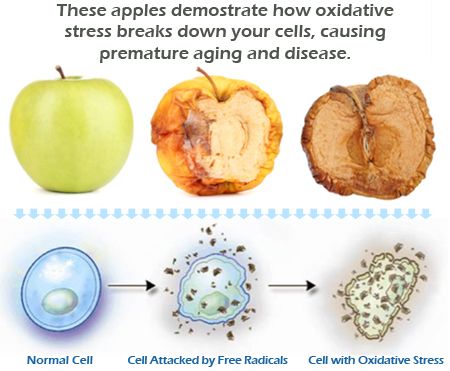
Oxidative stress is when there is too much oxidation and our body has a hard time pulling together enough resources to balance it out.

Oxidation is when a molecule is in a reactive state(called free radical) and is looking for another electron so that it can go back into a balanced state.

This naturally happens in our bodies through breathing, digestion, cellular metabolism and more.

Our bodies response to a bunch of these reactive molecules(free radicals) that are looking for an electron to go back into balance is to send antioxidants.

Antioxidants are how our body balances oxidation. You may have heard of foods like blueberries being healthy because they have lots of antioxidants.

Basically our body uses these antioxidants to protect the reactive molecules from trying to take electrons from cells and instead take from the antioxidants which have many electrons to give.

How did we get to the point where we had too much oxidative stress?

Oxidative stress comes from many sources and is usually handled by our bodies as a normal everyday thing.

When it isn’t, damage occurs to our cells and inflammation is caused.

The problem is when we continue causing huge spikes in oxidation and stop doing the things that help our bodies deal with and repair from oxidative stress.

Some of the biggest causes of oxidative stress are:

– Emotional stress

– Eating foods that are empty and that we are            allergic/sensitive to

– Infections, parasites, fungal

– Hormonal imbalance

– Alcohol

– Dehydration

How do our bodies repair from oxidative stress?

(First click here to check out the article on the foundation principles to migraine health)

– Thinking properly and making sure you have enough “me” time and emotional support along with a strong dream and core values

– Breathing clean air with a healthy breathing pattern

– Drinking adequate amounts of clean fresh water

– Eating healthy organic whole foods according to your ancestral needs

– Sleeping in a quiet restful place for adequate amounts of time based on stresses

– Moving naturally and not creating bad patterns of movement

What do we give our bodies to be able to better deal with oxidative stress?

Antioxidants!

There is a measure called the ORAC(Oxygen Radical Absorbance Capacity) score which can tell you how many antioxidants foods have.

Here is an explanation of ORAC as well as the highest known sources.

Here are some high antioxidant foods from dr. axe

  • Goji berries: 25,000 ORAC score

  • Wild blueberries: 14,000 ORAC score

  • Dark chocolate: 21,000 ORAC score

  • Pecans: 17,000 ORAC score

  • Artichoke: 9,400 ORAC score

  • Elderberries: 14,000 ORAC score

  • Kidney beans: 8,400 ORAC score

  • Cranberries: 9,500 ORAC score

  • Blackberries: 5,300 ORAC score

  • Cilantro: 5,100 ORAC score

Make sure to watch our video on the one common connection behind every migraine and what to do about it below

“Simple” right?

Just make sure you lower your creation of oxidative stress by doing and eating more natural things.

Optimize your lifestyle through the Foundation Principles of Migraine Health  so that your body can repair.

And take in more antioxidants which are found in fresh organic whole foods to balance out the oxidants.

If you’re having trouble getting a plan in place to do these three things OR if you are doing them but not getting the results you wanted with your migraine intensity and severity then let’s talk.

Setup a talk through this link and try out the trial Stop Your Migraine Trial Call

The FREE 5 Most Common Mistakes Of Hormonal Migraines E-Guide teaches you:

– Why hormones are the most important focus around why your migraines and headaches keep triggering

– How PMS is common but NOT normal and why it needs to be addressed to be pain free in the long term

– The 5 most common mistakes why hormones stay broken, why so many women become migraine free with pregnancy and why birth control is not a solution