Light was the absolute worst when my migraines kicked in. The more the migraine escalated, the worse light became.
I can stare at fluorescent lights now and be fine because I’ve brought down my brains sensitivity and hyper-vigilance to environmental stimuli.
In this article, we will be talking about fluorescent light, light sensitivity, what it’s doing to our brains and how we can prevent it from causing migraines and headaches.
Can fluorescent lights cause migraines and headaches?
Yes and no.
It has been thought for years that fluorescent light was a trigger that we had to avoid to prevent a migraine but that has changed in recent years.
Yes, it may trigger, but other triggers may cause a migraine that creates the hypersensitivity to light which we then get affected by and end up blaming the light…
When in reality it was another trigger.
But we also have to remember that triggers are different from causes.
Even though we may have a sensitivity to a food that triggers our migraine…
It’s really the gut infection we have that’s causing the sensitivity and setting us up for trigger.
So we want to differentiate the two and make sure we are dealing with causes and not just palliating with trigger removal.
Fluorescent light is highly artificial and because of this, causes strain on the body, brain, and eyes…
Especially if we are under it after morning hours and you’ll learn why later in the article.
Business owner, Vital Living WellSpa and Grandma J..
How to prevent migraines from fluorescent lights?
Preventing trigger and ideally preventing all exposure to fluorescent light is the name of the game.
We want to reduce our sensitivity to it, reduce our exposure to it and understand why it causes problems so that we can minimize the damage.
These three tips will get into it.
The 3 best tips for fluorescent light sensitivity with migraines and headaches
There are three factors here that will make or break your brain.
1. Blue light
Why does fluorescent light cause us problems?
We know that fluorescent light is artificial and we have never been exposed to this type of light before in a million years of evolution.
But it also creates a huge shift in our brains rhythms.
Fluorescent light contains a large spectrum of light but one that does not actually help us see well.
But our brains have been genetically wired to receive blue light in the morning to wake us up and amber light in the evening to wind us down.
Every cell in our body and brain works on this cycle.
When the blue morning light comes in, it triggers our cortisol(stress hormone) to wake us up, make us focused and give us energy.
When the blue light disappears, an orange light is left in the sky, triggering our brain to drop cortisol, and raise melatonin(sleep hormone) so that we can wind down and have a deep reparative sleep.
But when we are under fluorescent lights, this doesn’t happen.
Our body stays wired and our entire cycle shifts.
We can end up taking our stress hormones right into sleep, and not having our sleep and repair hormones working at all.
This is a recipe for very high trigger levels, very low threshold and bad foundational principles.
It’s one of the reasons night shift work is now classified as a carcinogen.
We want to avoid this.
Ideally, we would completely avoid fluorescents but we can hack it by using things like amber glasses which can be found through this link or switching to other forms of light that don’t contain the blue spectrum.
Remember even our phones and tv screens release blue light and this is why we have apps like fl.ux and twilight as well as night mode on our devices.
Watch this video to understand more about using glasses to block blue light here:
Dr Bradley Katz on Light Sensitivity, Migraine, and Glasses for Migraine | ABC4 Interview
2. EMF
Next, we need to understand electromagnetic fields.
These are fields created by electric devices and anything with a battery.
Our body is electric, it functions on a very small current of electricity. (The earths natural resonance that keeps us alive is under 10hz)
But our devices do not. (They can range from 20hz to 300Ghz+)
They use huge amounts and exposing our body to these can have grave effects.
Every day more and more studies are coming out showing that EMFs can be both neurotoxic and carcinogenic. (Article)
This is for regular people. The sensitive migraine brain is even more fragile to its effects.
We have to reduce the total EMF exposure. Do you know what your daily total is?
When we are exposed to these fields, they stimulate our tiny little cells and make them go haywire.
Electromagnetic fields come from:
Anything with a battery
Phones
Computers
Smart meters(remove immediately)
Wifi
Watches
Fluorescent light
Other electronics
Luckily the electromagnetic fields of fluorescent lights drop off fairly quickly so as long as we can keep our distance from the absolutely necessary ones, we are not exposed to as much of its negative effects.
3. Environmental sensitivity
Environmental sensitivity is a huge problem and even though it may trigger us sometimes, it’s not a cause.
For millions of years we have been exposed to all manner of sounds, lightsand smells.
If they caused us to become crippled every time they came along, we wouldn’t have survived this far.
So I encourage you to ask and find out if your environmental sensitivity is just a byproduct of a hypervigilant brain.
A brain that cannot deal with the stress it’s under, a brain that has been put on high alert because it thinks it’s dying and a brain under a huge amount of oxidative and inflammatory stress.
It’s very possible.
Studies have actually shown that by only reducing food triggers, migraine sufferers reduced their sensitivity to environmental stimuli like light.
This changes the way we see migraines and headaches and their triggers.
But it’s a better way of looking at things because it changes our focus from one of stopping symptoms and avoiding triggers…
To one of finding the root cause and supporting the bodies ability to cope with it.
But there’s another new trick coming out in studies lately.
Greenlight
BONUS: Green light for migraines
This abstract says that green light does not apply to the photo-phobia or light sensitivity that migraine sufferers commonly experience.
In a study done on 41 migraine patients who were able to complete it, they found that green light was the only light spectrum that didn’t increase pain.
On top of that, they found that patients experienced a 20% reduction in pain as well.
So when making the switch, cut out the blue and use more amber and green.
If you are experiencing really difficult migraines that aren’t responding to treatment read our article on understanding status migrainosus and intractable migraines here.
To understand more about migraines and what to do about them join the community here.
Are you sensitive to fluorescent light?
Are you sensitive to other types of light?
See our video on blue light sensitivity and migraines below:
Let me know in the comments below and remember to share this with someone else that may be sensitive.
Migraine symptoms can be incredibly scary especially because they can be confused for a stroke.
Some will even get a visual aura without ever having a full-blown migraine or headache.
About 20-30% of migraine sufferers experience an aura but luckily, it doesn’t always have to be this way.
In this article, we will talk about what a scintillating scotoma is, how we can understand what is going on in the brain when it happens and how we can go about supporting our brain so that this doesn’t happen.
What is a scintillating scotoma? / Definition
A scintillating scotoma is defined as:
Scintillating:
“Sparkling or shining brightly”
And
Scotoma:
“A partial loss of vision or a blind spot in an otherwise normal visual field.”
A scintillating scotoma is generally seen as a small flickering blur in your visual field usually near the center.
This shining, flickering blur usually grows and can sometimes occupy as much as half of the visual field.
In a standard migraine, this blur will start, grow to a certain size, and then disappear. After it disappears, the pain phase of migraine will usually start.
But the scintillating scotoma may also happen as part of a “silent” migraine or acephalgic migraine where the aura happens by itself and you never cross over into the pain phase. This can be understood as a less severe form of damage going on in the brain with no reflexing of the pain going into the trigeminal nerve which is usually associated with causing the head pain.
Watch this video to get an idea of what one example of scintillating scotoma looks like:
Is there a stroke risk with scintillating scotoma?
As with all types of migraine and chronic pain, there is an increased correlation between them and stroke.
“Schürks et al.showed that individuals with migraine had nearly a twofold increase in the risk of ischemic stroke over people without migraine.”
The important understanding here is that migraine is just a label of certain symptoms that happen.
But what we want to understand is what is causing the brain to produce these symptoms. This happens when our trigger level, crosses our threshold level at which point the stresses on our body is more than they can handle and they can no longer keep us in a “normal” state.
I had that too (scintillating scotoma without the headache). It was scary– went to the ER because I thought I was having a stroke.— Lisa Gold (@bylisagold) 8 September 2016
Once it’s too much to maintain normal, our body goes into this protective mode we call migraine where it revs up its healing systems, activates pain and forces us to batten the hatches and heal.
The lower we can keep our triggers and the higher we can keep our threshold, the less damage is being done to our brain and the faster our brain is healing, reducing both migraine and stroke risk.
Scintillating scotoma treatments
feverfew helped me a little. I didn’t have the scintillating scotoma pre-migraine for a long while taking it. Sending best wishes.— Ginny Battson (@seasonalight) 10 October 2018
Treatment for a scintillating scotoma through mainstream avenues will be the same as treatment for any migraine with aura.
It’s usually drugs.
But covering up symptoms by using pain killing drugs and drugs that stop the natural systems of the body is just asking for more problems.
When the body is asking for help and we silence it…
We haven’t changed its need for help, just its ability to ask for it.
So we want to give it support, heal our brains metabolism, build stronger brain cells, take stress off of our brain and look at the root causes of the biggest strains on our bodies.
What causes scintillating scotoma? With and without migraine headaches
The most commonly attributable cause for migraines with aura is cortical spreading depression(CSD).
Cortical spreading depression can be understood as a “wave” of “depression” covering the cortical part of our brain which is the outside of it and called the cortex.
The outside of our brain goes through a wave of depression which we can think of as a “blackout.”
These blackouts are like power outages and resets.
But we are a living organism so having live tissue go through a blackout can be very dangerous because our tissues constantly need nutrients like oxygen to stay alive.
When this blackout goes over the visual processing part of our brain that deals with all of our visual processing, we can experience weird visual symptoms.
This is where the scintillating scotoma comes from.
If the blackout goes over another susceptible area like our scent system, we will hallucinate with odd smells known as phantom smells.
Watch this video to see what cortical spreading depression looks like:
How do we stop CSD?
Cortical spreading depression is a wave.
It’s a surge of activity followed by a mini-blackout where all electrical activity stops.
This is generally started in one small area and if it’s large enough, it will start spreading, affecting more and more of the brain.
We can think of our brain like our house.
If we were to create a power surge in our kitchen, if it was strong enough and we didn’t have breakers in our house to prevent them, it could start affecting other rooms like our bedrooms, washrooms, etc.
This is like our brain.
When it becomes unstable because it can no longer maintain a normal state, brain cells will get excited.
These excited brain cells will stimulate others creating a wave of excitement.
Our brain cells are not prepared for this because they are unstable which means their resources have been drained and they aren’t running optimally.
So when the wave of excitation comes, it’s followed by a wave of inhibition.
Everything goes dark.
So we want to prevent this entire mess in the first place.
We want to:
Avoid the biggest exciters
Stop the brain cell stress from getting anywhere close to this
The big exciters
One of the main causes of brain cells getting over excited is too much glutamate.
Glutamate is a neurotransmitter used in the brain to communicate. But it has also been implicated in migraine.
What’s one of the biggest migraine triggers and a huge source of glutamate?
MSG.
MSG is monosodium glutamate and is a form of glutamic acid that is “free.”
Many foods have glutamic acid and it poses no problem because it is bound inside nutrient complexes.
But when that glutamic acid is “freed” then it can absorb rapidly and make its way into our brain in large amounts.
This can create a huge artificial “boost” in our brain cells functioning that can create a lot of damage and is one of the reasons we get the well known “Chinese food headache.”
Even menstrual cycles have been found to increase our bodies own levels of glutamate when estrogen and progesterone drop which is at every period.
Generally, most whole foods have their glutamate or glutamic acid bound together to other amino acids and nutrients so that digestion and release of them into the body is slow.
But some foods are high sources of these unbound forms of glutamic acid.
Let me know if you notice anything peculiar about this list in the comments below.
High sources of free glutamic acid to be careful with:
Tofu
Corn (corn starch, corn syrup)
Yeast
Cheeses especially aged
Milk and dairy products
Soy sauce
Soybeans
Sourdough bread
Wheat
Anything hydrolyzed
Calcium caseinate
Gelatin
Proteins extracts, concentrates, isolates or protein fortified
Carrageenan
Bouillon
Broth
Stock
“Flavors” and “flavoring”
Maltodextrin
Citric acid
Pectin
We want to be wary of any of these foods triggering a headache or migraine-like symptoms so that we can pinpoint if it’s a food sensitivity, excess glutamate etc.
See this pin for symptoms of MSG sensitivity.
My Natural Family – A Healthy Recipes Blog with Real Ingredients
But we also want to stop the level of stress on our brains before we even get close to triggering a migraine. The closer we are to the “threshold” of trigger, the more volatile and susceptible our brains are.
Stopping it before it starts
Like the age-old saying, an ounce of prevention is worth a pound of cure, for migraines, this is truer than ever.
We need to:
Prevent leaky brain
Lower nociceptive stress
Support with brain nutrients that stop excitation
Preventing leaky brain
It has become quite common to hear of the term “leaky gut.”
This is where the spaces in our intestinal tract that usually let in nutrients and keep toxins out get too large and can no longer police what’s going on.
This lets a number of harmful substances into our blood and sets us up for many chronic inflammatory and painful conditions.
Our brain has a protective film between it and our bloodstream as well.
This is called the Blood-Brain Barrier.
When this barrier gets leaky, our brain cannot keep things like glutamate out of the brain space and this means lots of problems.
We have to avoid this and support the repair of the blood-brain barrier.
Simple things work well like:
Avoiding electromagnetic fields especially putting our phones to our heads
Taking cold showers and using cold plunges to stimulate our vagal nerve
Proper deep sleep every day where we wake on our own accord and sleep in complete darkness
Nociception is the stress sensing mechanism of our nervous system.
Our nervous system connects our entire body together.
If something is stressing our nervous system in our toes, our gut, our hands or anywhere else… It will add to this nociceptive stress perception.
This all gets added up by the nervous system and if it thinks it’s too much to handle, it gets triggered and a cascade of negative stress reactions can happen even if we aren’t consciously/emotionally stressed.
So we want to lower the total nociceptive burden.
This means, avoiding heavy exercise, avoiding too much mental stimulation, avoiding emotional stress, keeping our environment and diet clean of chemicals pesticides/herbicides, balancing our hormones etc.
These all play a part and self-care is a must. If you only take breaks when you get sick, you are feeding your own illness.
Brain nutrients that stop excitation
There are some amazing nutrients that keep our brain calm and cool.
One of the most well known, most useful and most highly recommended is magnesium. See our article on magnesium glycinate for migraines to understand the studies, why magnesium works and how to use it.
Then we also need to think of zinc which is a key mineral and many people are low on especially with hormonal issues… and GABA which is a neurotransmitter the brain uses to calm down.
GABA is like glutamates calm, cool, and collected cousin in the brain.
Where glutamate excites, GABA calms.
When we can feed our brain the nutrients it needs, lower the nociceptive stress it feels and prevent leaky brain from creating chaos, we can make huge gains in stopping brain excitation and blackouts before they start.
These are some of the key areas that we have MASSIVE impact with when we use the right diet, lifestyle, nutrition, exercise, supplementation and other therapies that your doctor simply doesn’t know to recommend.
We are empowered through knowledge and education and this is one of the main reasons clients come to Migraine Professional for consulting and assessments. If you feel lost or stuck then reach out and someone from our team will be here to teach you more about your brain and what makes it healthy than you will learn anywhere else.
Do you experience scintillating scotomas? What do they look like to you? Let me know in the comments below and share this with someone who may benefit from this article.
Healing your headache can range anywhere from a minor delay, all the way to years of life-changing habits.
Luckily, we have experts who lead the way in terms of research and treatment with patients of all types of headaches, from migraines, to clusters to trigeminal autonomic cephalalgias and everything in between.
One of these experts who spent many decades in the field is Dr. David Buccholz, the creator of the 123 plan to heal your headache.
In this article, we will be talking about what the 123 plan is as talked about in his book and how we can incorporate it into the new understanding we have of migraines from the most recent research done.
What is the heal your headache diet?
The heal your headache diet was devised by Dr. David Buccholz after many decades of experience treating patients as a headache specialist.
The 1, 2 and 3 of the plan are to:
Stop using quick fix medications
Eliminate the food triggers on his food trigger list
If needed after these two steps, find a great preventive that works for you
Let’s get into the specifics.
Heal Your Headache
The heal your headache 123
The 1, 2 and 3 are based on:
1. Avoiding the quick fix
2. Reducing your triggers
3. Raising your threshold
In avoiding the quick fix section, Dr. Buccholz highlights that medications and painkillers that are commonly used to abort migraines are in fact contributing to the majority of the problem.
He says that when we take a “quick fix” medication that even though we may be getting relief from an immediate headache or migraine, we are actually lowering our bodies’ threshold to trigger.
This is one of the reasons quick fix medications cause rebound headaches or what are called medication overuse headaches.
See the infographic below for some of the most common rebound medications.
What are our trigger levels and threshold levels?
Trigger level is talked about a bit differently by David Buccholz than by me but it is essentially the sum total of all of the stress on your body.
The higher the stress coming in from all mental, emotional, physical, environmental, dietary etc areas, the higher our trigger level.
Our threshold is the level of tolerance our body has to stress.
We are both born with a predisposed tolerance….
(Some peoples’ bodies can take more of a beating than others)
But we also raise and lower our bodies’ tolerance depending on what we go through in life.
These two are talked about by Dr Buccholz but the way I approach migraines with patients is by understanding a third factor which is our foundations.
Our body is constantly trying to reduce the tension of stresses but also get stronger and increase its tolerance to them.
It does this through its main healing, regenerating and detoxifying systems.
David Buccholz method of reducing your triggers comes from foods that have substances in them that may cause the dilation or constriction of blood vessels in the brain leading to trigger.
But over the years, the dilating and constricting theory of migraines has been found to be very flimsy and many migraine sufferers do not experience this.
Some of the foods he lists include:
Chocolate
Caffeine
MSG
processed meats
Cheese and other dairy products
Nuts
Alcohol and vinegar
Certain fruits and juices like citruses and those with preservatives
Yeast baked goods
Artificial sweeteners like aspartame
Possible connections to soy and processed proteins
This list is actually quite good and many would see improvement with it.
But it is missing some key points.
1. It is not accounting for individual sensitivities to foods, of which we all have and of which all of them cause our trigger levels to go up.
2. It is not accounting for the most inflammatory foods in our diets which place a huge load on our bodies.
3. It is not accounting for all of the biogenic amine filled foods that can create histamine and tyramine issues in the migraine sufferer. Migraine sufferers have been found to hold lower levels of an enzyme called DAO which is actually supposed to break these substances down and protect us from their damage. (Study)
See the infographic below for a list of often sensitive foods. This is similar to the heal your headache food trigger list but more in depth.
This is one of the reasons I created the food triggers guide which breaks the three areas down into simple steps.
Then at the end, I go through a step by step of applying and troubleshooting the food triggers guide and how to go about making the dietary changes.
If you’d like to learn more about the food triggers guide go here.
Raising your threshold
Dr. Buccholz goes on to say how to raise your threshold to trigger.
His approach is mainly through the use of a preventive medication, but this is only once the individual has come off of any quick fix rebounds and has removed the worst offenders from their diet.
This makes sense as preventing something you keep causing is counter-intuitive.
But instead of relying on medications, I like to look at more natural methods of relief. This usually comes in the form of nutritional supplementation.
Nutritional deficiencies are one of the biggest causes of migraines because without having the building blocks for our brain to run its systems, everything starts breaking down and waste piles up.
But when we can fix the deficiency and support the cleaning up of the waste so that it doesn’t damage more brain cells, we can get amazing relief.
There are many amazing supplements to use but this is specific to what is going on with you.
Many find magnesium, CoQ10, and riboflavin to be the star players in their relief and these have been shown to work well and be safe and well tolerated.
Always ask your doctor before making any changes to your routine.
Watch this video to learn about Dr Buccholz’ work.
How do we incorporate the 1 2 3 heal your headache plan into today’s understanding of brain, body and migraine health?
The 123 heal your headache plan is a great start but we want to tackle these areas deeper and I personally prefer to use more natural methods and correct deficiencies as opposed to just medicating.
This means we definitely want to:
– Lower our use of “quick fixes” and in some cases, we will want to use more natural supports like turmeric, ginger and other herbs
– Cut out all sensitive, inflammatory and amine filled foods according to the food triggers guide (See our article on the most common migraine triggers)
– Support our bodies and brains with more nutrients that diet may not be able to satisfy, especially if we are not eating a wild meat and organic food diet (See the migraineur food pyramid)
By taking these 3 areas laid out by Dr. Buccholz, we can take the more recent understanding of migraines as a protective mechanism often contributed to by nutritional deficiencies, hormonal dysregulation, structural issues, gut dysfunction and environmental sensitivity and we can take our healing program to the next level to have more pain-free days.
To become a part of this movement because you love natural solutions and learning about your pain join the migraine professional community here.
Have you ever read the book heal your headache?
Let me know what you thought about it in the comments below.
Share this with someone who needs to learn the 123.
Experiencing pain can be debilitating enough without the room spinning on top of it.
Luckily, addressing the root cause of the spinning may be an amazingly simple fix and very cut and dried.
But even when it isn’t, these questions will lead you to the source of the problem so that is can be solved and not simply avoided with medications.
In this article, we will be talking about 19 expert questions you can ask yourself and your healthcare provider about vertiginous migraines.
What are Vertiginous Migraines?
Vertiginous migraines are simply migraines that are presenting with vertigo-like symptoms.
Some may even get the diagnosis of vestibular migraine.
The best way to understand vertiginous migraines is through the symptoms:
Feeling unbalanced or like you are spinning
Experiencing internal vertigo where you feel like you are spinning
Or experiencing external vertigo where you feel like everything around you is spinning
Nausea that may lead to vomiting
The standard migrainous symptoms like headaches, prodromes, postdromes and auras
Abnormal eye movements and double vision
Perspiration/sweating
Ear issues such as ringing, hearing loss etc
Lack of coordination or feelings of weakness
It is important to understand that vertigo and vertigo-like symptoms can stem from many areas of the body, not just the ears because they hold our vestibular(balance) system.
It may also come from vertebrae being out of place, gut inflammation, neurological issues, infections, BPPV etc so just focusing on the ears or brain usually won’t get us very far and this is why we have 19 questions.
This is the same as migraine because in many cases the cause is not coming from the brain per se, so a full mind/body assessment and program is without question a must.
Always make sure that if you suddenly start experiencing dizziness or vertigo that you immediately go to your doctor and rule out anything serious.
19 Expert questions to ask about your vertiginous migraines
1. Is it from a subluxed atlas or other vertebrae?
One of the first and sometimes simplest places we need to look when vertigo or migraine-like symptoms start happening is vertebrae that are out of place.
This is even more crucial if it was after an accident, trauma or head injury but it doesn’t have to be.
Having any of our vertebrae out of place can create enough stress on the system to trigger vertigo-like symptoms but the most important here is your neck vertebrae.
Of them, the most susceptible is usually the atlas or C-1.
This vertebrae can be thought of as a “floating” vertebrae because it is not held in place like the others.
This means if we are going through stressful situations, have muscle laxity, have excess estrogen coming in from our environment(who doesn’t?) etc that this vertebra can come out of place very easily.
If it does, just like the other cervical vertebrae, they can actually pinch our artery which supplies blood to the brain.
Bad blood flow to the brain is an easy way to get vertigo, migraine etc.
In this case, it would be important to have a well-trained osteopath or NUCCA chiropractor check your vertebrae and help align them.
See the picture below to understand how an artery that feeds our brain actually goes through our vertebrae and how having a vertebra out of place may cause huge issues. (See vertebral artery)
Veins
2. Is it this little fungus?
One of the largest growing epidemics is mold poisoning. Funguses are incredible creatures that we absolutely must have for our own survival.
But when household or workplace molds are sitting in the atmosphere we breathe, eat and drink from, they can cripple our body and compromise our immune systems leading to infections, inflammation and a whole host of issues which can end up in vertigo and migraine.
But if we don’t “sniff” out our environment, we will just think it’s vertigo or migraine…
This is why it’s crucial to have your environment tested if you have been dealing with a chronic illness that won’t go away, if there is any mold in your house(think shower) or if there is sitting water anywhere(think basements).
man silhouette
3. How balanced is your BS?
A simple and often overlooked cause of vertigo can come from the rampant inflammation and problems with oxygen delivery to cells that can happen as a cause of bad Blood Sugar regulation.
Fatigue, wired and tired, cravings, daytime sleepiness, weakness after meals etc can all be signs that your body is not dealing with the meals you are giving it well and it cannot handle the carbohydrate load.
A good rule of thumb is that if your waist measurement is over 80% of your hip measurement, you are developing insulin resistance which will effect any meals you eat.
Congestion from food is one of the most common causes of mucking up the ears, nose and throat system.
In fact, it was the main contributor to the chronic mucus and congestion I experienced as a child.
Many individuals have a hard time completely digesting dairy and this causes the formation of mucus.
When this mucus overloads our body it often ends up in the ears, nose and throat system because this is where our body interacts with the world and our immune system is on high alert.
Because this system is connected, when the sinuses get full and overflow into the ear channels, this can make our vestibular system go haywire and give us vertigo-like symptoms non-stop.
Think about how in an airplane, chewing or plugging your nose and blowing in it causes your ears to pop. These systems are connected.
If mucus is clogging it you may develop serious issues that may be chronic as long as you continue with the dairy.
Cut out dairy and substitute it with decongesting foods like ginger and spices as well as other astringent foods like grapes and lemons.
See a professional if congestion is a main factor in your health.
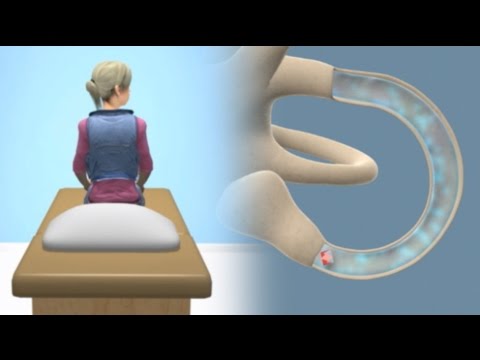
5. Is it because of the crystals in your inner ear?
One of the most commonly attributable causes of vertigo is “rocks” getting into our balance machinery.
In our ear, we have small canals that shift with the change of gravity and our body uses their shifts to tell how we are positioned in the world.
In these canals, there are small “crystals” which help with the complex process of understanding our surroundings.
The idea is that if a pieces breaks off of the crystals and floats into the highly sensitive canals that this will send off a bunch of mixed signals to your brain.
This is often called Benign paroxysmal positional vertigo or BPPV.
A technique called the Epley maneuver is used to treat it, see video below.
6. Is the way you sit and stand cutting off circulation?
One of the biggest changes of our modern lives is that everything we do, from sitting on the couch, to sitting at a desk, to driving, to even looking at our phones causes our body to “pull in.”
Our back curves, our shoulders round and our head comes forward if our ergonomics are not properly taken care of.
This causes a massive strain and just the simple change of posture with our head being forward can create pinches that will translate into dizziness and often headaches.
One of the most common side effects of medications, especially migraine medications is dizziness, nausea and vomiting.
Use this medication interactions calculator to find out if one or more of the medications you are having react with each other and may cause unwanted side effects.
Ask your doc for another medication that may fit you better.
8. Did it start after head trauma?
Head trauma is an absolute must rule out in terms of any kind of vertigo.
If it happened after head trauma you will want to get a full assessment and see if your hips, shoulders and temples are all level with the floor.
If not, this may point to an imbalance the body is compensating for that may be causing huge stress on your balance system.
Leveling your temporal bones and getting cranial balancing from an experienced practitioner in this case.
See an osteopath, craniosacral therapist, NUCCA chiropractor or CHEK practitioner.
9. Is it from a bad bite? (TMJ)
TMJ and TMJD(temporomandibular joint dysfunction) are constant and everyday stressors that will continue to send off your entire body.
Remember that if you can’t eat, you will die, this means your body will prioritize eating over having a balanced head, spine, shoulders etc and this may cause problems right into the vestibular system creating dizziness and balance problems.
One of the simplest tests is to have someone check your bite and see if it is crooked or off in any way but having a trained professional do it is best.
See this pin below on how the jaw interlocks and functions:
Treatment with a TMJ Specialist in Augusta GA | Georgia Clinic of Chiropractic Blog – Augusta GA
10. Do you have a middle ear infection?
If we are getting infections, if our immune system is low, and if our maintenance systems like detoxification are compromised then a simple middle ear infection can send our entire world spinning.
Boost the immune system and clear out the cause of the infection. See the migraineur food pyramid to learn how to boost immunity with food.
11. Is it because of bad ear hygiene?
Many people take q-tips and stick them into their ears.
This is wrong and q-tips should not be placed inside the ear as this can lodge wax inside, lead to infections and trigger the balance system.
Instead, use a better line of products like these:
This is a reflex present between 3-4 months of age. But if it’s not properly integrated and released it can actually continue to trigger our fight or flight system.
It is also a sign that part of our brain is not integrating and functioning properly.
Luckily we can use Moro training to reintegrate the brain and support the repair of this system.
Use this video to understand more about the Moro reflex.
13. Is it gluten induced ataxia?
Gluten has thousands of studies coming out on its undesirable effects on the compromised digestive system, many of which are brain and neurological issues.
One of these is gluten induced ataxia where the eating of gluten can actually cause the loss of oxygenation to the brain leading to light-headedness, dizziness and spinning.
One of the first steps for experiencing any chronic illness is to try removing dairy and gluten for 1-3 months as they can be massive stressors on the system.
This goes along with any food allergies and sensitivities as well. One of the most common causes of migraines and headaches is food sensitivities and this has been shown through studies that have found upwards of 100% improvement through only changing diet.
See the pin below for the most commonly sensitive foods found in one study on migraine sufferers.
14. Is it because of compression of the vestibulocochlear nerve?
The vestibulocochlear nerve is only one of the cranial nerves and they all “hold hands.”
This nerve may be compressed or it could also be any of the nerves to the eyes, face or the rest of the cervical spine that may be causing the problem onto this one.
This is why an assessment is important and particularly having your hyoid bone assessed to see where it sits.
15. Could it be a symptom of autoimmune thyroid?
Thyroid issues affect the entire body and vertigo is a very common symptom of it.
Making sure you have all of your thyroid levels checked if there is any suspicion that the thyroid may be causing this like fatigue, metabolic or weight issues.
See this pin on some of the best food for the thyroid and become suspect if your diet does not include most of them.
The Best Foods For Nourishing Your Body with Hashimoto’s – Unbound Wellness
16. Is your brain causing it?
As we go through life, the different stressors and nutrient deficiencies we experience may cause declines in certain areas of our brain.
If it isn’t structural, dietary or tied to another condition or illness then having a functional neurologist give you an assessment can make a huge difference with just a few simple exercises.
17. Is it emotionally induced?
Emotion can be held in all different areas of the body and emotions that are strong enough and suppressed long enough can cause massive diseases, even cancer. Trauma is no joke.
This means vertigo, dizziness and migraines are just the tip of the iceberg but it makes sense because our entire body responds to the way we feel.
Using techniques like emotional freedom technique(EFT) can help you release that tension and stress that’s building up inside creating neurological and vestibular issues.
18. Do you have any visual, auditory, cervical or jaw issues?
The simplest start for vertigo and vestibular issues is to notice what else is coming along with it. What else is it tied to?
Do you get blurry vision, do you have neck or shoulder tension, do you get bloated or fatigued, do you get an aura etc.
What is connected that could point to a common root cause?
19. Are you breathing right?
If you want to be healthy and especially if you want to overcome a chronic illness, you have to understand breathing right.
Can you actually breathe right? Do you know what breathing right is?
It is not as simple as “being able to breathe.”
Can you exhale fully?
Can you inhale fully and comfortably?
What is your regular breathing speed and depth?
Are you actually hyperventilating, causing a massive strain on the system?
See the video below on breathing to learn how to breathe and see our article on cervicogenic headaches here to learn specifics.
Dizziness is a complex issue and can come from many different areas but by using these 19 questions and diving deeper into the root cause you will be much better equipped to actually fix the issue.
If you want to understand and be able to apply more amazing techniques to your migraines because you are sick of the pain and symptoms then join over 15,000 other migraine sufferers in our community here.
Do you experience vertigo or vestibular like issues with your migraines?
Let me know in the comments below and share this with someone who may benefit.
Any natural, low side effect and safe approach to migraines is very welcomed.
I have found countless migraine clients that are low in magnesium that with simple smart supplementation, they get amazing relief. It is even so pronounced that if they miss a day or two of magnesium supplementation, the migraine monster will come back.
In this guide, we will be talking about magnesium and migraines but specifically talk about magnesium glycinate, vestibular and menstrual migraines.
Lol. I’ve had migraines for 50 years. I was so sick when I was still teaching! Was on Topamax for 20+ yrs but it stopped helping. My neuro put me on 500 mg Magnesium Citrate and 400 mg Vitamin B2 each day. Totally works! Better than in decades!— Janet Newman (@BorisandGracie) 29 September 2018
What is magnesium and magnesium glycinate?
Magnesium is a mineral, commonly known as the relaxation mineral.
It is the fourth most abundant mineral in your body and is responsible as a cofactor in over 600 reactions in the body.(1)
Half of the american population consumes less than the required amount of magnesium necessary to keep their body running properly and magnesium has been implicated in:
Type 2 diabetes
Metabolic syndrome
Elevated C-reactive protein
Hypertension
Atherosclerotic vascular disease
Sudden cardiac death
Osteoporosis
Migraine headache
Asthma
Colon cancer
One study even found 75% to be magnesium deficient.(Link)
In one study using IV magnesium sulphate for acute migraine attacks, almost 90% became completely pain free.(2)
But there are some issues with magnesium supplementation that make it more complex than just take this pill every day which we will go into like:
Kinds of magnesium
Magnesium from your diet
Where you are losing magnesium
How to improve magnesium utilization by the body
Best ways to get magnesium into you
There is also a big problem with blood testing for magnesium levels as blood only contains 1% of our bodies magnesium and isn’t found to be a reliable indicator of how much magnesium we have or need.
Watch this video to learn about signs of magnesium deficiency:
Why magnesium glycinate for migraines?
Magnesium glycinate is a form of magnesium that absorbs very well and this becomes crucial when we understand that it is not just about the nutrients that you put into your mouth, but also the amount of those nutrients that get absorbed and used by your body.
Generally, magnesium glycinate and threonate are recommended for their great absorption and utilization by the body and this is what I have found with migraine sufferers.
See this pin for different types of magnesium and what they are good for:
The Supplement Shack
Kinds of magnesium
We need to understand the different kinds of magnesium because this can make all of the difference. When we are reading labels we want to see that the amount of elemental magnesium is our desired dosage.
If the label just says “magnesium citrate” but doesn’t have an elemental magnesium amount then the actual amount of magnesium molecules might be far less.
Like we talked about above, magnesium glycinate and threonate seem to work well but the thing with magnesium is that everyone responds differently.
200Mg of mag glycinate may work for your friend but not for you and this is why your own experience is most important.
Make sure to try different kinds, in different amounts at different times of day if what you are doing isn’t working for you.
Your body will make you well aware when you’ve taken too much. Because it is the relaxation mineral if you take too much or a kind your bowels don’t tolerate it may literally relax your bowels to the point of diarrhea.
Magnesium from diet
A supplement is just that, a supplement to an already solid program. Your core program is your diet, this cannot be avoided.
Our food is full of magnesium if we are eating the right foods and this is where the majority of our magnesium should be coming in.
The key here is that all of the nutrients that come bound up with the magnesium improve the body’s ability to use it and put it into important places like the brain.
Foods you must include in your diet for magnesium and other vitamins and minerals that improve its use:
It helps our body deal with stress but because of this, we have what is called the MBR or magnesium burn rate. (3)
The more stress, tension, illness, and exercise we have, the more magnesium our body is burning and the more magnesium we require to keep our brains a float.
You are constantly using magnesium and other nutrients and that is why having a solid nutritional base is the most important first.
Add these factors up to see how much magnesium you are “burning:”
Dependance on “junk foods”, processed, packaged, fried, excess empty calories
But just food is usually not enough for our magnesium needs unless we live a very de-stressed life and live on a completely organic/wild diet.
Over the years as we have continued to over plant food into our soils and do a really bad job of putting the nutrients back in, magnesium levels have dropped dramatically.
Our soil is over farmed and our top-soil that holds all of the microorganisms that make nutrients available to the plants are dead. This is one of the reasons organic farming is healthier.
How to improve magnesium utilization by the body and the best ways to get magnesium into you
Magnesium, just like every other mineral, vitamin and nutrient requires a number of others present so that it gets used by the body.
Some of the main nutrients that should come along with magnesium are:
Zinc
B vitamins(especially B6)
Vitamin D
Selenium
Bicarbonate
+ all of the nutrients you are most likely deficient in as a migraine sufferer
The next piece is to understand urine alkalinity and acidity.
When your urine is alkaline, you will excrete less magnesium and when it is acidic you will excrete more.
As long as you aren’t taking diuretics, making sure your urine is alkaline by using something as simple as pH strips is a key factor in making sure the magnesium isn’t being leeched out of your body.
Usually, acidic urine is the dark yellow urine.
The best way to make sure urine is alkaline is to get lots of potassium, this is best acquired through vegetables.
Then there is the issue of compromised digestion and intestinal parasites which can reduce the amount of magnesium you absorb, require lots of magnesium to deal with and parasites can actually steal it.
If digestion is compromised then supplementing is likely still a good idea but you can boost magnesium intake through:
Topical magnesium spray
Epsom or magnesium salt baths
One of the fastest ways to get the most magnesium right into your tissues is a hot Epsom or magnesium salt bath with 1 cup Epsom or magnesium flakes and 1/2 cup baking soda.
But a topical magnesium spray like magnesium chloride is an easy way to apply magnesium throughout the day and it can also make an effective deodorant when mixed with an essential oil.
It is important to remember that those with kidney disease should speak to their doctor about magnesium supplementation first.
Magnesium Dosage
Again, magnesium tolerance and effectiveness seems to be different for everyone.
Usually starting at a total of 200mg a day and ideally spreading multiple doses out throughout the day but at least twice a day is good so that your body has more chances to absorb it when it needs it most.
It is generally found that 400-600mg a day works well but some require doses of 1000mg-1500mg a day to start receiving enough.
See the product below from fullscript which is a professional supplement brand dispensary.
After a prospective baseline period of 4 weeks they received oral 600 mg magnesium daily for 12 weeks or placebo. In weeks 9-12 the attack frequency was reduced by 41.6% in the magnesium group.”(Study)
Menstrual migraines and magnesium
One double-blind placebo-controlled study on menstrual migraines found that magnesium was more effective than placebo and that magnesium deficiency may play a role in how low your threshold to migraine trigger is. (Study)
Generally, if you are not supplementing with magnesium daily then at least starting with it on the 15th day of your cycle and into your period.
Vestibular migraines and magnesium
This study found that patients on these prophylactic therapies one of which was magnesium showed a decrease in duration, frequency and intensity of vestibular migraines.
Thedizzycook who is a chronic vestibular migraine sufferer takes a magnesium supplement daily and recommends it as well.
When dealing with magnesium and migraines it is important to understand:
– The kind of magnesium you are taking and what your body will tolerate
– Foods and activities that lower magnesium levels in the body
– How to get magnesium through diet as well as the cofactors and conditions necessary to keep it in your body
– Some of the fastest and most convenient ways to absorb magnesium
Before you start supplementing, learn what is contributing to your migraines here and what foods you should be eating for them here.
If you want to learn more about migraines because you are looking for better answers then join our community of over 15,000 members here.
Have you ever tried magnesium? Let me know in the comments below and share this with someone who needs more magnesium in their life.
We can all agree that a cluster headache is definitely not just a regular headache.
Luckily, the etiology of a cluster headache is very similar to a migraine so by applying the same principles we can get amazing relief and healing.
In this article, I will be talking about melatonin for cluster headaches, what studies have shown, why it helps and how it’s used.
What is melatonin?
Melatonin is a hormone that works oppositely to cortisol.
Whereas cortisol is one of the main stress hormones that give us energy, wakes us up and in times of need sends us into fight or flight mode to protect us from danger.
Melatonin is the opposite. When cortisol levels fall, melatonin levels rise.
In a healthy individual, when the sun rises, cortisol shoots up and awakens us. Then in the afternoon cortisol starts falling and melatonin starts to rise.
Melatonin helps our body prepare for sleep and all of the regenerating and repairing our brain does during sleep.
Melatonin is absolutely essential for regulating our circadian rhythms which control the 24 hours cycle that every single cell in our bodies goes by.
Our cells need a time for activity and a time for detoxification, rest and repair.
If our circadian rhythms are off or if we are overly stressed, melatonin will not be created and secreted properly which may lead to problems.
The darker we can make our environment before sleep, and the better we can create a sleeping environment with 100% darkness, the greater our chance of increasing our body’s production of melatonin.
This study says that “Melatonin levels have been found to be decreased in cluster headache patients.”
See the picture below for more information on melatonin’s cycle.
A cluster headache is a severe headache that most often comes with one-sided head pain usually around an eye. This pain is so severe that they are often given the name “suicide headaches.”
This pain may come with other symptoms like eye-watering, sinus congestion and swelling.
Symptoms usually last a few minutes to a few hours and come in clusters.
See the video below for more information on cluster headaches.
It is important to understand that patients with cluster headaches show a greater percentage of increased work-related stress, self-employment, tobacco smoking, and alcohol use or abuse.
Lifestyle factors like the standard American diet, over-consumption of caffeine and alcohol and the use of tobacco all result in mitochondrial impairment, nutrient deficiencies and toxicities which may all continue cluster headaches despite treatment.
Why may melatonin help cluster headaches?
Melatonin has been used in a few studies with varying levels of effectiveness.
In one study, 10mg of melatonin taken at night relieved cluster headaches in approximately 50% of patients with results beginning 3-5 days after the start of treatment and continuing for the duration of treatment. But the 2 chronic cluster headache patients in the study didn’t respond.
Another study found that “For cluster headache, melatonin 10 mg was superior to placebo.”
But melatonin is an amazing hormone and has a great safety profile.
Melatonin helps:
Reduce oxidative stress and excitotoxicity which are some of the leading causes of headaches
Counter the melatonin reducing effects of blue lights that come from screens like phones, TVs and computers
Cooldown inflammation which is a common cause of full body and brain stress
If our cluster headaches are coming from a disrupted circadian rhythm, increased inflammation, oxidation, disrupted sleep or a lack of melatonin secretion, melatonin may prove to be helpful in finding relief.
See the pin below for the many benefits of melatonin.
benefits of melatonin | … Melatonin Controls Our Cycles, Mood, Reproduction, Weight and Even
How to use melatonin for cluster headaches
Only small amounts of melatonin are generally needed. The most effective way to take melatonin is sublingually where a small tab melts on your tongue and absorbs through your mouth tissue right into your bloodstream.
It is important to note that melatonin may cause mild headaches or daytime drowsiness if too much is taken so starting with a low dose such as 1 or 2mg and working your way up may be best.
Generally, melatonin levels will slowly start to rise around 6 pm as cortisol drops and this is a good time to take it but anytime before bed works for some.
Some supplements have incredibly large amounts of melatonin like 100-200mg but studies have found that 3-10mg are effective.
If we can combine the reduction of lifestyle factors that contribute to clusters along with support for our body’s own production of melatonin along with supplementation, we will be much more effective in finding relief and long-term health.
If you want to learn more than you ever have about headaches and different head pains, join over 15,000 other members in the community here.
Have you ever experienced a cluster headache or tried melatonin? Let me know in the comments below.
Share this with someone you know who might be thinking of trying melatonin or currently experiencing cluster headaches.
There are so many different types of headaches, many of which are very rare but they all have common causes.
Oxidative stress is a linking connection to all triggers of head pains and understanding how to stop it, avoid it and protect from it is the key to freedom from pain.
In this article, we will cover 3 practical tips for nummular headaches which are often found around the temples.
Nummular headaches are a much less studied and rarer condition.
The word nummular means coin-shaped or coin-sized and this is exactly what nummular headaches are.
Headaches that are usually the size of a small to large coin.
The size usually ranges from a penny to a lime and most often occurs on the sides of the head and temples.
I could go into more details about how nummular headaches present but it’s important to understand that the naming behind headaches is not because this has actually been found to be different from other headaches in what is causing it and treating it but because different pictures of symptoms require different “labels.”
It is strictly for the purposes of medical doctors having labels to classify things under that some headaches like nummular headaches exist.
This means that even though it sounds like a different headache, the causes, contributors, and ways to relieve it are largely the same.
Research also shows that those with nummular headaches will often experience migraines as well, only supporting the fact that the individual that has the headache is much more important than the headache the individual has. (Study)
3 Practical tips for nummular headaches
1. Flip the switch
When we are understanding headaches we need to understand that the trigeminal nerve often plays an important role.
But this nerve, just like all of our nerves are on a “chain of command.”
This means that they are slaves to everything the body prioritizes above them.
If our brain is having issues, it can “vent” the problem out into the nerves, just like a breaker would, to prevent overload in the brain and a power outage.
This is very common with head pains as well as other chronic pains like back pain.
So if our brain is running on “high” and this is causing a massive output of energy that it can’t handle. It has to let go of it somehow which can end up as head pain…
This means we need to turn our brain down. Flip the switch from high to low.
This is most often caused by sympathetic overload.
Our body has two modes that it is constantly switching between if we are healthy.
1. Fight or flight mode
2. Rest and digest mode
Fight or flight is lead by our sympathetic nervous system and activates when we are stressed, in danger or even when our body thinks we might be in danger. This is the mode that is on when our brain is overloaded and can contribute to pain.
Rest and digest is lead by our parasympathetic nervous system and activates when we are calm, relaxed, sleeping, meditating etc. This is the mode that switches off the high output.
So we want to stay in rest and digest and out of fight or flight, simple.
But staying in rest and digest means a few things.
High-quality breathing throughout the day
This means we should be breathing through our nose most of the day and night with deep belly breaths. No raising the shoulder when you breathe and little to no mouth breathing.
Low toxic load from food pesticides, junk foods, environmental toxins, hygiene products, heavy metals etc
Our body takes in stress as a “total.” If there’s a heavy burden on its detox systems because of poisons, it will think it is in danger. Use natural products and eat whole foods. Read labels. (See article)
Quality restful sleep
Do you feel refreshed? See our article here on sleep.
Stable blood sugar
No yoyoing. If your waist measurement is over 80% of your hip measurement then your carbohydrate intake should be low and only include complex carbohydrates.
Enough exercise to send yourself into sympathetic for a short time but give yourself a strong parasympathetic rebound
When we exercise, our body gets very fight or flight because it thinks we are stressing. But this is good if used the right way because when the exercise is over, our body will rebound the opposite way, causing us to go into a repairing and regenerating rest and digest state much better than before.
Keep the switch on calm, cool, collected and “yin.” Stay out of the aggressive, stressed, reactionary mode that drains your body’s resources.
2. Understand migraines
Instead of thinking of migraines as a condition, it’s much more useful to think of them as a mechanism.
We all have this migraine mechanism that can be triggered in the right conditions. (Study)
Just like we all get pain if we put our hand on a hot stove.
Keep it simple and address the cause of the load on your body. You most likely know what it is.
Tune in to yourself, stop for a moment and get out of your “monkey mind” and get into your body.
What is it saying and what is it asking for?
Migraines function on a trigger level and threshold. If our trigger level which is the total of stresses on our body crosses our threshold which is the amount of tolerance our brains have, we will get a migraine.
Take some time, preferable right when you wake up and right before bed to tune in. Don’t reach for your phone because this just causes you to tune in to other peoples lives.
Tune into your own and ask yourself how you feel and what’s going on.
What emotions are the first to come up?
Are you stressed? Most likely…
What is it about?
Stress is like an open tab on your computer. It will keep draining the total energy of the computer unless you deal with it.
Take the thought and emotion to the end, find a logical conclusion or solution that will put your mind at ease, at least for now.
Stressing over an issue will do nothing but take away from your ability to actually deal with it when it is most important.
Save yourself for the most important time to deal with something that is stressing you. Do not hold on to it.
Mental and emotional stress is one of the biggest factors that add to our trigger level and trigger the migraine mechanism which may be responsible for your headaches.
Tune in every day, at least once but ideally when you wake up and before bed.
Nobody will be there for you more than you.
If you need to know more about the migraine mechanism see this article.
3. Kill inflammation
Inflammation is one of the very first and last pieces of disease and pain.
Even though the exact area of the pain may not necessarily be inflamed because our bodies are highly integrated, the source of the pain usually is.
Inflammation is a reaction used by the body to repair itself, but when this inflammation continues over a long period of time it can actually become counter-productive and cause our tissues to break down.
This is often seen in the brain where inflammation responds to the break down of our brain cells but then if the source of the breakdown isn’t fixed, this inflammation continues and our migraine brain can end up with those scary white spots. (See below)
MRI Brain White Spots Cause | Mri Scan Images
We need to stop this.
This means stopping the cause but also soothing the inflammation that is already there.
Here is a simple step by step to start with:
1. Do you have food triggers?
One of the most common causes of headaches is food sensitivities. This is an absolute must area that you have to spend time investigating. A minimum of 1-3 months of intensive dietary testing should be done because one of the root causes of inflammation is from food. See our food triggers guide here.
2. Are your hormones out of balance?
Hormones are huge players in our health, they are the big signalers behind our entire body’s systems and if they are out of balance, they can take a small inflammatory spark and turn it into a large inflammatory firestorm. Have them tested. See our 5 mistakes of hormonal migraines guide here.
3. Have you been checked for structural issues?
Function follows structure. If our structure is out of balance we can literally be causing a chronic short circuit. Our body functions on bio-electricity and because of this, it needs to be wired properly. Get a NUCCA chiro to check your cervical spine and see our article on cervicogenic headaches here.
4. Did an accident start the pain?
If this all started after a physical trauma, you know where to look. But you have to find the right practitioners to deal with it and only seeing a GP and a physical therapist usually is not enough. See a CHEK practitioner, osteopath, cranio-sacral therapist and neuromuscular therapist.
5. Could trauma have begun the process?
The patterns of mental and emotional behavior we experience when we are young get imprinted onto us. If we don’t recognize unhealthy patterns and work to release and replace them, we can literally continue acting ourselves into trigger day in and day out. If you think trauma plays a role make sure to see a trauma release therapist.
6. Brain metabolism break down?
When the above seems to be okay and we’ve been inspected by some of the best integrative medicine practitioners, then we need to look at brain metabolism. If our brain is not receiving the right nutrients to go from A to Z then it will create by-products at B and C and D and E and these byproducts can literally result in the death of brain cells and a “blackout.” This needs to be resolved and you can learn more about it in our article on how to stop a migraine with aura here.
Headaches can be complicated if we go to the wrong sources who don’t investigate what is actually causing the issue and instead just numb pain.
But when we can understand the root causes and give our body support, we may become completely free of chronic pain and because of this, you should join the migraine professional community here.
Have you ever had a nummular headache? Comment below and share this post with someone who may be experiencing headaches right now.
20-30% of all migraine sufferers experience the aural phase which can include a fortification spectra.
Luckily, science has been advancing rapidly and we are starting to understand what is going on with our brains when this happens.
In this article, I’m going to be talking about 5 remarkable causes of fortification spectra migraines, what it means and what can be done.
What is a fortification spectra/fortification spectrum migraine?
A fortification spectra migraine is a type of migraine with aura that has the characteristic visual image seen below.
teichopsia – Barely Worth The Headache
Migraine with aura is a unique type of migraine in that before the head pain phase, there is a set of symptoms that precede which usually end right before the migraine head pain phase starts.
The 4 phases of a migraine with aura are seen in the pin below:
Migraine Symptoms: The Stages of a Migraine — Migraine Buddy
It’s important to note that the fortification spectra will come in the aura phase of the migraine attack.
See this video on what a fortification spectra looks like:
Let’s get into the details.
5 Remarkable causes of fortification spectra migraines
1. Trigger level + threshold level = migraine?
Before we start we have to know what we are trying to do, as well as the 50,000 foot view of what is causing the spectra.
Above all, we need to understand that if our trigger levels go over our threshold level, we are in the high risk and extremely fragile zone of our brains. This is trigger central and the likelihood of trigger is high.
Our trigger level is the sum total of stress load on the body. The body uses what is called nociception to tally up all of the stress on the nervous system. This stress can come from anywhere because our nervous system is connected to our whole body.
Everything from:
Mental/Emotional Stress
Food sensitivities
Gut infections
Dysbiosis
Electromagnetic fields
Physical Stress
Structural imbalances
Lack of hydration
Breathing imbalances
Poor sleep quality
Non-alkaline urine
Trauma
Cultural and social stress
Even spiritual stress
These are all taken by the body and perceived by the nervous system as harmful. The higher our trigger levels, the more sensitive our brain becomes.
Then there is threshold level. Our threshold is the level of tolerance our body has to stress. It’s the upper limit that it can take before the stress becomes too much to be able to maintain normal functioning.
Its a simple equation between these two.
If our nervous system’s total perceived stress(trigger level) is higher than our body’s ability to tolerate stress(threshold level) then we will trigger a flare-up.
For some, it may only be a flare of their migraines, for others with comorbidities it may also be a flare-up of IBS or their lupus or their rheumatoid arthritis or their depression or anxiety etc.
The body is completely interconnected by the nervous system and when stress is more than it can tolerate, we get symptoms.
2. Hypersensitivity
Next, we have to understand hypersensitivity of the brain and central sensitization.
When our stress level from all of the different areas is constantly high, our brain takes a beating.
Our brain is always trying to produce enough energy to deal with the stress that is going on in the environment.
But this energy takes dozens of different nutrients to produce.
If we have the reserves of nutrients then dealing with stress is just a blip on the radar.
But going through chronic levels of stress non-stop means our brain needs to constantly produce more and more energy.
This means there is a constant need for more and more nutrients.
We have to provide these or else the nutrient generating pathways of the brain start breaking down.
This means whole foods, pastured and wild meats and organic vegetables that we aren’t sensitive to.
But when these pathways don’t have a certain nutrient, they start getting backlogged, just like a factory line that is missing one piece of the manufacturing process.
Everything will start piling up and these half made products can actually become incredibly damaging and oxidizing to our brain cells. If enough pile-up and the brain doesn’t have antioxidant nutrients to stop the damage, the brain cell may die.
If this is happening within all of our brain cells because of too much stress and not enough nutrients being delivered…
Our brain goes into hypersensitivity.
Remember that pain is a protective reflex and studies have actually shown that migraine is used by the body to bring more nutrients to the brain. What is one of the first things that happens when a migraine comes on? Your heart begins to race which increases blood flow and nutrient delivery.
So then the brain becomes highly sensitive to everything. It becomes hypersensitive and will trigger at any little thing that adds stress.
This becomes the lights or sounds or smells or weather changes…
These are all fairly normal occurrences we’ve dealt with for millions of years but when the brain is hyper-sensitized, it will trigger for the smallest things.
And then central sensitization comes in.
This is a process like hypersensitivity where the entire nervous system gets wound up.
It gets very tense and because of frequent triggers, it develops a pathway.
Just like every thought that we have, created a pathway of neurons in our brain, our frequent triggers go through a pathway as well.
But when we become centrally sensitized, this pathway has been frequently reinforced. Every time we trigger, the brain will go through this pathway.
Because it is using the pathway so often, it will make the pathway stronger. More energy through the pathway means it needs to reinforce it.
Just like a road, if there is lots of traffic, eventually the road will be expanded to more lanes to support more traffic.
But this is bad for us because it means it becomes easier to trigger.
So we want to prevent this by using other pathways whenever we can.
Stimulating our vagal nerve with things likes cold showers, exercising, meditation, learning new complex tasks etc.
These all help us get out of that pain pathway and stop reinforcing it.
Instead, our brain has to use other pathways that are healthier for us and reinforces them.
We want to avoid making the brain hypersensitive as soon as we can and develop new pathways for the brain to go through to avoid reinforcing pain.
3. Cortical spreading depression
Then we have cortical spreading depression which has been implicated in migraine with aura.
Cortical spreading depression is a series of events where our brain goes through a “blackout.”
If the brain isn’t creating enough energy to deal with its needs and if it’s being overrun with tasks it will function like a car or a hose.
If you slowly give a car gas, it will slowly rev up and speed up along with it. But if you give the car more gas than it can comfortably rev up with it will overrev and put much more strain on the engine than it normally would with the same amount of stress but with a slower increase.
Or if you have a garden hose, it’s connected but hasn’t been used in a while. You turn it on and the water rushes through the hose. But what happens is that the air has to go somewhere so it goes through this sputtering effect.
This is just like our brain.
The stress on it is high and there aren’t enough nutrients in the brain cells to deal with it. The body triggers the migraine cascade as a way to protect the brain and increase the energy coming to it.
This causes a sputtering effect throughout the brain where a wave of “blackout” goes through it known as cortical spreading depression.
If this blackout goes over a visual processing area of the brain then we will likely get visual symptoms like a classic migraine with aura with a fortification spectra.
But this is usually just temporary as the brain reboots and the protective pain phase of migraine ensues.
This means we want to avoid over-stressing the brain and make sure that it’s receiving enough of the nutrients it needs to deal with the stresses at hand.
4. Failing brain metabolism
This all points to bad brain metabolism. It is one of the most common causes of inflammation and oxidation in the brain that leads to excitotoxicity or brain cell death.
Too much stress + not enough nutrients to deal with it + not enough stress management + not enough of our foundational systems working properly = Serious brain problems
We want to support this, first and foremost by reducing stress load. But that is a given.
You have to take out as many areas of stress on your mind/body as possible.
Stress does not do anything for you except feed more problems.
But we need to support our nutrient intake as well and this means getting enough nutrients.
We have to make sure we get enough minerals through high-quality vegetables, bone broths, nuts, and seeds. If we need more like is commonly found with magnesium, calcium and zinc then we go out of our way to eat more of the foods high in them and supplement where necessary.
We have to feed our gut microbes because they help us create butyrate which is a type of fat. This gets produced when our body is fasting, in ketosis or when we feed our gut bacteria high-quality resistant starches.
We need to get enough vitamins and this is really crucial for the brain. But there are so many vitamins, we have to make sure we have base amounts of.
Just taking a multivitamin usually isn’t enough if your diet is SAD.
This is where we want to add in superfoods to our diet like organ meats and mollusks.
Again, supplementing where necessary as food may not always be enough especially if you are chronic.
Using whole food nutrition gives you the actual cells of other organisms which contain millions of nutrients all bound together as opposed to just pills and powders which the body has a harder time using.
5. Inflammatory/oxidative storm
This all leads to the one common cause that has been found to connect all head pains.
Oxidation and inflammation are running rampant in the chronic migraine brain.
But stopping it isn’t very straightforward because if this has been happening for a long time, the brain is wiring itself to keep producing it.
It’s on high alert and wants to protect itself as much as it can but the mechanisms it has to do so are very primal, like pain.
So we need every tool we can get that helps stop the inflammatory and oxidative storm.
Along with all of the above techniques mentioned, we need to provide a host of antioxidants and anti-inflammatory foods.
These provide the building blocks our body can use to protect itself and repair the damage.
Foods high in antioxidants are:
Purple, red, blue grapes
All of the berries
Dark green veggies
Orange vegetables
Organic tea
Wild fish
Some foods high in anti-inflammatory compounds are:
When you can address the cause you will be much better suited to actually fix the issue and won’t have to rely on quick-fix medications that do nothing for your long-term health and can actually make everything worse.
Have you ever experienced a fortification spectra? Let me know in the comments below and share this with someone else who’s had them and may want to learn more.
We can all agree that getting a migraine is bad enough.
But when this migraine causes a type of paralysis of our eye, it can make everything that much worse…
Luckily if we can understand how our brain is reacting to stress, we can take measures to prevent the build up of getting so bad that we trigger one of these.
In this article, I will cover 3 massive keys for ophthalmoplegic migraines.
What is an ophthalmoplegic migraine?
Ophthalmoplegic migraines have actually been reclassified and are no longer labeled as a migraine at all.
“The recent revision of the International Headache Classification has reclassified ophthalmoplegic migraine from a subtype of migraine to the category of neuralgia.”
And this review says that a better name might be “ophthalmoplegic cranial neuropathy.”
But for the purposes of this we will use the term ophthalmoplegic migraine.
Ophthalmoplegic migraines are a rare type of neurological disorder that comes with a one sided headache. What makes this type of “migraine” characteristic is that the affected side also comes with a paralysis of the eye muscles giving it the name “ophthalmoplegic.”
These symptoms usually come on slowly and present similarly to a migraine except the paralysis of the eye muscles and after affects can last for days or even weeks before returning to normal. The eye symptoms have been known to take 14 days to develop after the actual headache.
Any signs of a new set of symptoms similar to ophthalmoplegic migraine are considered an emergency as they could be an aneurysm or brain tumor.
Watch this video for a representation and description of an ophthalmoplegic migraine.
Common symptoms of ophthalmoplegic migraines
Double vision(diplopia)
Dilating Pupil(mydriasis)
Droopy Eyelid(ptosis)
Weakness or paralysis of the third fourth or sixth cranial nerves
Sensitivity to light(photophobia)
Sensitivity to sound(phonophobia)
Nausea
Vomiting
Misalignment of the eyes(tropia)
Most patients recover from symptoms within days to weeks but some have permanent neurological deficits.
What treatments are used for ophthalmoplegic migraines?
It is crucially important that you get an MRI to rule out anything more serious as having an ophthalmoplegic migraine like episode may be something much more serious.
Once that is ruled out the standard route usually uses steroids and patients have been found to respond well to them.
But we also want to support the brains metabolism, reduce inflammation, bring down our trigger levels and improve our brain’s ability to deal with stress.
How do we understand ophthalmoplegic migraines?
Ophthalmoplegic migraines are rare, newer and not very well understood.
Because of their rarity, there isn’t much information available to pull from.
But when we can look at the body as one interconnected organism and understand the different pieces that are available, we can develop some keys.
“Multiple recent case reports and series demonstrate focal enhancement of the affected cranial nerve, as the nerve root exits the brainstem.”
and
“This finding contributed to the current classification of the disorder as a neuropathy, with the present understanding that it is due to a relapsing-remitting inflammatory or demyelinating process.”
So what we are seeing is that the cranial nerve that connects to the affected area which is usually the eye is getting thicker where it exits the brain stem.
There is also an inflammatory process and demyelinating of the nerve which simply put means the nerve is “unwinding.”
Another study goes on to say,
“The third cranial nerve which is the oculomotor nerve has been found to be thickened and could possibly be because of the demyelination and remyelination of the nerve.”
This furthers our understanding that the affected eye nerve is thickening because of a possible inflammatory process that is causing the nerve to unwind and rewind. And this problem is coming out from the brain stem.
So we want to support the brain stem, reduce our trigger levels and reduce inflammation.
These are the three keys.
3 Massive keys for ophthalmoplegic migraines
Trigger level > threshold = migraine trigger
This applies to migraines as well as other inflammatory and “flaring” conditions.
Our trigger level is the sum total of all of the stress put onto our bodies from things like hormone imbalances, environmental stress, mental/emotional stress, food sensitivities, physical imbalances etc.
All of the individual stresses get summed up in the body, creating our trigger level.
Our threshold is the sum total of all of the resources and ability to cope that our body has with all of the stresses going on in our lives.
If our trigger level goes over our threshold to trigger, we will trigger. Simple as that.
So the goal is to stay well below our trigger level, the lower we can stay the better we will do with sensitivities that get created toward the top of the trigger level like light, weather and sound sensitivity.
This means reducing all of the stresses going on and increasing our body’s ability to cope with them like getting enough sleep, eating high-quality nutrients that reduce inflammation and add antioxidants, maintaining alkaline urine, regular moderate exercise levels, proper breathing patterns etc.
When we can reduce the total stress load and increase our body’s tolerance for stress, we can live much happier and more pain-free lives.
Supporting the oldest part of our brain
Since ophthalmoplegic pain is related to the brainstem we need to understand and fix strain that can go on in the brainstem.
It is one of the oldest systems of our brain and is part of what is called the “reptilian brain.”
It is called this because it doesn’t have much of the emotional or higher thinking functions of the paleomammalian(limbic) or neomammalian(cortex) brains.
See the picture below for the three brains.
triune brain model – Google Search More
This old part of the brain is focused on maintaining all of the basics of survival.
It wants you to find safety, sustenance, and procreation.
These are the most basic functions of nature and are the most deeply ingrained into our functioning.
If we don’t feel safe and secure and sheltered…
or
If we don’t have a reliable source of food and water…
or
If we cannot see a way of procreating now or in the future…
Then everything else falls apart.
This is also represented well within Maslow’s hierarchy of needs below:
Published by Debbie Kinder
So absolutely first and foremost we need to create safety and security in our lives and we need to make sure we are eating good quality food and water without scarcity.
This means we need to live in rest and digest mode more than we do in fight or flight mode.
Whenever our safety, security or sustenance gets threatened or we even feel or perceive it’s being threatened, our body will turn on all of its resources because it thinks we are in danger.
The problem is that this will use up all of our resources, turn off our ability to rest and repair and compromise our digestion, leading to a cascade of problems and high trigger levels.
We want to cool any of that stress, it doesn’t do us good and most likely any stress that we are feeling, we initially used as a way to make ourselves do something.
But stressing about things will create more problems than it is worth so instead we can just recognize it, recognize the emotion and create a simple logical path to resolving and relieving it.
We have to find a way to live in “rest and digest” mode or our brain stem and fight or flight mode will continue turning on and trigger a huge release of resources we can’t afford to lose.
This means finding safety, security, and sustenance of your mental, physical, emotional, dietary and spiritual needs.
Start with where you are and use what you’ve got.
Kill the brain fire
Inflammation is implicated in every disease known to man and inflammation is the brain fire.
But it has a cousin that it always comes with and that is oxidation.
Oxidation is a process where chemicals that are very reactive take electrons away from normal functioning chemicals, causing them to get damaged.
The simplest form of oxidation is when you cut an apple in half and leave it out. Oxidation is what makes it turn brown because the air is reacting with the apples exposed tissue.
This process of inflammation and oxidation is well known to play a part in the brain, leading to the breakdown of how the brain is functioning.
High trigger levels mean oxidation and inflammation.
The brain stem feeling like it isn’t safe and secure means our body will go into stress mode and burn up resources.
Loss of these resources mean we get a very low threshold to trigger.
Stopping the cause is the most important and in the brain this often means lowering total stress levels from mental and emotional causes, lowering environmental stress from things like blue light and electromagnetic fields, and lowering food and gut-based stress.
Luckily, the same things that stop inflammation and oxidation help us support our anti-inflammatory and antioxidant systems.
It’s one of the most important factors in migraine and brain pain.
Food.
We want to eat lots of high-quality whole foods…
But we want to avoid high sources of sugar or too much fat.
And we want to avoid all processed and packaged everything. The byproducts found in processed and packaged foods are not food and should not be ingested. (See our article on clean foods here)
Especially the oils. Vegetable oil, palm oil, canola oil, soybean oil etc are all incredibly toxic for the brain and this is one of the many reasons processed and packaged foods are a no go.
This means lots of vegetables cooked in a variety of ways in all of the different colors.
Each method of cooking unlocks different nutrients out of the plant cell and each color of food has different antioxidants.
Eat only wild and pasture raised meats as conventionally raised meats are highly inflammatory.
Lots of inflammation means one of the first things we need to do is stabilize blood sugar. For a list of blood sugar snacks see our post on the Top 10 super simple blood sugar stabilizing snacks here.
As we develop a better sensitivity to the foods that our body is asking for and can differentiate them from the foods we are getting cravings for because of imbalances we will be able to better support the anti-inflammatory and anti-oxidant systems in our body.
Food provides the building blocks for our brain either functioning well and being able to carry out its daily tasks or getting choked up with waste and creating the breakdown of nerve pathways.
Even extremely neuro-degenerative diseases like relapsing-remitting multiple sclerosis have been reversed with the help of food so it should never be discounted.
To understand more about how migraines are acting on your brain and actionable items you can do about them today see our post on intractable migraines here.
Click here to join the migraine professional community because you want the most up to date and best quality information on the web for migraines here.
Have you ever experienced an ophthalmoplegic migraine? How did it progress and what helped you? Let me know in the comments below and share with anyone who may be experiencing this as well.
The migraine aura is a sign that a migraine has begun and the body is now going into protective mode.
The body will actually use a migraine to protect it from damage that is being done to the brain.
Starting a migraine is the body’s way of revving up the system and increasing the flow of blood and delivery of nutrients to the brain.
See the video below for a quick representation of a migraine aura.
VISUAL MIGRAINE AURA ANIMATION
It also causes us to stop what we are doing, in case what we are doing is causing the damage to the brain.
We want to support this process by increasing the available nutrients in our body, stopping what we are doing that may be causing damage to brain cells and giving our body and brain-specific tools to heal the damage. (To understand the damage see this article)
Also see our incredible herbal drink for migraines and headaches here.
How do we understand a migraine aura?
Pain
Migraine, just like many pains that we experience in our body are used by our body as a reflex.
This reflex is there to signal to us that we are creating tissue damage and to make us bring our awareness in onto our selves and stop what we are doing. Whether what we are doing right now is part of the cause or not.
Just like if we stub our toe on the corner of some furniture, the pain is there to make us stop doing it and teach us to not repeat the action.
It’s a very primal reflex, but it has worked for us for millions of years.
What is causing this damage to occur that our body has to respond with an aura and pain?
“Oxidative stress is a plausible unifying principle behind the types of migraine triggers encountered in clinical practice.”
This review is saying that in every case except pericranial pain, all migraine triggers are a source of oxidative stress.
And that oxidative stress is the main factor that goes into the creation of all migraines.
This is big because it changes the way we think about migraines from something that needs to be beat, numbed and avoided… To something that needs to be understood and healed.
This means that we can pinpoint 1 single area to focus on instead of the random drugs that have been used for migraines over the years “off-label.”
By understanding that this 1 area needs help we can:
Give it more support
Learn how to avoid it
Heal it when it’s happening
But this is easier said than done and in these 7 essential skills we will learn more.
7 Essential Skills for how to stop a migraine aura
1. An ounce of prevention is worth a pound of cure
Prevention always beats just reacting to pain. Stop chasing the pain.
Instead, take these 3 principles and create a system to avoid triggering the mechanism:
The patients experienced a “dramatic fall in the number of headaches per month, 85% of patients becoming headache free.”
The best part?
Along with 100% of the patients improving, food elimination is safe and inexpensive.
Food seems to be one of the biggest causes and triggers for migraines and even more for those that don’t respond well to treatments.
If we are eating food that our body is sensitive to, this can directly contribute to brain inflammation and oxidation which can lead to triggering and symptoms like aura.
Understand your food, where it comes from and how your body reacts to it.
If you experience digestive disturbances, frequent fatigue or cravings as well as headaches after meals, these can all add to triggering a migraine.
Your migraine pattern
This is the #1 area you need to recognize in your life, because few other people will be able to do it for you. Many people do not wear their emotions on their shoulder and so it is difficult to gauge what is going on from the outside.
A migraine pattern is a pattern of thought, emotion or behaviour that we take and usually repeat often.
From inside of us, if we don’t observe ourselves it can be difficult to see so we need to take a step back.
This pattern, however it shows up in our lives is a way that we initially learned to cope with a stress.
Our body uses patterns to make things easier on us so that we dont have to spend energy focusing.
But this pattern was built out of coping with a stress.
The problem is that this pattern can wind us up, build up tension and put us onto a rampage.
It becomes almost unconscious, even though it was used to deal with stress, usually becomes an even bigger stress and creates a huge amount of tension in our bodies.
We will run through the pattern and overcare. This overcare comes from our innate desire to care and to become attached to situations but when it becomes a pattern, it becomes overattachment.
We need to learn to recognize our migraine pattern, recognize our overcare and recognize our overattachment to situations, experiences, emotions etc.
If we can do that, we can recognize the pattern as soon as it starts, stop it and use techniques to drop any tension we are holding on to because of it.
Moving and exercising our bodies daily so that our lymphatic fluid gets pumped and waste is removed from the brain.
The correct breathing pattern that takes tension off our neck and head, massages our organs and brings in enough oxygen for brain cell metabolism. (1 Big tip for cervicogenic headaches article)
High quality water with enough potassium and magnesium coming from diet to keep our urine alkaline. See our video on magnesium here.
Belief that the super organism(you) that is leading them(your cells) has a clear purpose and desire to live.
Ginger is amazing and has been shown clinically to do wonders for migraines.
It is not only amazing for inflammation, but also for pain and nausea. This study found ginger to be useful as an abortive.
To top it off, it’s safe enough to use while pregnant or breastfeeding which makes it an amazing tool.
So how do we use ginger?
It can be taken as a fresh herb, as a dried powder, in a tea, through a home made ginger beer, ginger candies and even ginger capsules.
The goal is to get enough of it and this can be tricky with things like ginger beer and ginger tea.
This study found that 250mg of ginger was as effective at stopping migraines as sumatriptan.
This article states the needs based on the types as:
250 mg of ginger powder
1/8 tsp. of dried ginger powder
1/4 tsp. of freshly grated ginger
1/2 tsp. of freshly grated ginger steeped in hot water for 5 to 10 minutes
1 tsp. of fresh ginger (not grated) steeped in hot water for 10 to 15 minutes
1 cup of ginger tea from 1 prepackaged ginger tea bag
Ideally, you want to take any abortives as soon as prodromal symptoms start coming but even during the aura and actual migraine may be effective.
For a super simple and delicious recipe see our ultimate herbal migraines and headaches drink here.
3. Stop what has already started
Once the aura has already started it can get tricky.
If our brain is creating a migraine because it is trying to protect itself, then stopping its protective mechanism may make matters worse.
It may even be responsible for why so many abortive medications leave migraine sufferers in “hangover” states for days.
But if we can go with the body, instead of against it…
And if we can help it do what it’s trying to do with a migraine which is:
Decreasing oxidant production
Upregulating antioxidant enzymes
Stimulating neurogenesis
Preventing apoptosis
Facilitating mitochondrial biogenesis
Releasing growth factors in the brain
Then we may prevent brain damage, full blown and even future attacks…
So we want to do what a migraine makes every migraineur do, just a little better.
Hydrate: But instead use brain friendly minerals like potassium, magnesium and zinc.
Grab a big bottle of water, give it a sprinkle of sea salt, some raw honey and the squeeze of a citrus like lemon. Close the bottle and give it a good shake. This water will be much more hydrating, absorb into your body easier and provide way more nutrition than just toxic tap or bottled water.
Bonus: If you have magnesium supplements like most migraine sufferers should, add it to the water. Magnesium is like a fire fighter for your brain cells, it helps cool any fires going on.
Kill stimuli: Environmental stimuli are completely normal for the average person but once the brain has become fragile enough to get migraines, all stimuli can aggravate the brain. This means we want to have a blacked out room using black out blinds or garbage bags and tape over windows and doors. Cut out all sounds with ear plugs or muffs as well as any odours but we all know that.
One of the main causes of brain cells to get damaged, inflamed, oxidized and contribute to the break down of the brain is because the brain cells metabolism is broken.
When the brain cells metabolism breaks, it cannot produce enough energy to run its systems and send signals throughout the brain.
Even worse, when the metabolic cycle doesn’t have nutrients to go from A to Z,(gets stuck along E or M or F etc.) then a bunch of oxidative particles start being created.
If we are not supporting the brain with enough antioxidants, these particles can actually destroy the brain cell.
But luckily one of the most important factors in this A to Z cycle is oxygen.
We need to support our body’s ability to bring in oxygen.
This means fixing our breathing and optimizing it.
If our abdominals are tight because of over-training or a mental desire to have a “flat stomach” we can end up limiting our breathing.
If we are constantly stressed or anxious, chances are, we are “chest breathers.”
A chest breather is someone who breathes with their chest.
Even though this may logically sound like the right thing to do because our lungs are in our chest, it’s not.
Our lungs are actually supposed to expand down more than they expand out.
They are only supposed to expand up a little…
Nowhere near enough to cause tension on the neck, head and shoulders but if we have a bad breathing pattern, this is a very common cause of headaches and poor oxygen intake.
To make matters worse, if we are breathing into our shoulders and neck then we are triggering stress receptors that will contribute to anxiety and bad sleep.
We want to breathe about 2/3 into our abdomen and only have the last 1/3 go into our chest which means NO neck or shoulder breathing.
How do we do this?
It takes time to retrain a breathing pattern especially if we have been doing it for 30 years, have social blocks preventing us from releasing our abdominal wall, are a nervous or anxious type of person or have stressed organs.
But it’s amazing what we can do with just 5-10 breaths, 2-3 times a day.
Ideally, we would do this anytime our migraine pattern starts to creep up.
To start and sensitize yourself, lay down flat with your back to the ground.
Grab a water bottle and place it on your stomach.
Your goal is to breathe a 6 second inhale and 6 second exhale without forcing anything.
On each inhale raise the water bottle with your stomach by breathing down into your belly.
On each exhale the bottle should come down.
Repeat this 5-10 times, nice and slow without tension for force.
Do this when you think you may be triggering, you can continue up to 30 breaths but don’t do more than that as you may relax too much and fall asleep. (Wouldn’t want that)
As a regular, do this twice per day minimum to retrain breath.
See our article on cervicogenic headaches to understand more about breathing. For specific breathing exercises see the video here.
5. Support the migraine mechanism
For some migraine sufferers, their bodies have few resources to deal with an attack so when the aura has started, little will work to prevent a full blown migraine.
But everything should be tried and every measure taken.
This is also a reminder that we pushed the envelope a little too far and need to pull back a little earlier before our body gets pushed over the edge again.
We need to support the system and plan for the hangover.
This means recognizing how it progressed and putting a plan in place to stop it…
Reducing total body stress load that comes in through our relationships, physical activity, electromagnetic fields, chemical exposure through hygiene products, makeups, foods etc.
And we need to boost nutrients available for the attack at hand, as well as our recovery period after the fact.
Usually, it is just a big life trigger that puts our body over the edge and into regular migraines.
Some common “straws that break the camels back” are:
Puberty
Pregnancy
Trauma
School
Menopause
Illnesses and infections
Environmental poisoning
Because it takes so long to build up to creating the migraine brain and we are often unaware until it’s too late, it can take more than just dietary and lifestyle changes to reverse the brain’s fragility.
This is where getting a high quality holistic healthcare practitioner like myself, NUCCA chiropractors, CHEK practitioners, naturopaths, functional medicine practitioners etc can make a world of difference.
But we can boost the brains functioning ourselves if we just know where to look.
This review suggests that magnesium should be tried in every migraine patient because as much as half of all migraine patients may be magnesium deficient.
This double blind placebo controlled study of vitamin B2 riboflavin found that it significantly decreased frequency and duration of migraines.
“The results from this study indicate that folate(vitamin B9) intake in the form of FA may influence migraine frequency in female MA(migraine with aura) sufferers.”
This study found that pyridoxine supplementation(vitamin B6):
“Led to a significant decrease in headache severity and duration of migraine with aura attacks compared to placebo”
So magnesium as well as vitamins B2, B6 and B9 have all been found to be effective in some study’s and many including migraine with aura.
It’s awesome because these are all vitamins and minerals, have great safety profiles as long as they aren’t abused for months on end and are simply adding to our bodies nutrient reserves. In essence, we are supporting the body to do what it is trying to do with a migraine.
Each of these nutrients has been found to fit into brain cells metabolism and support the energy generation and “clean up” of any damaging particles.
The doses used in these studies were:
Magnesium: 200-600mg/day
B2: 100-400mg/day
B6: 80mg/day (P5P is the best form)
B9: Dietary folate was assessed in the above study but this study found 5mg/day effective when combined with B6 (methylfolate is the best form of B9)
All of these nutrients are available in food and food comes with many more that are brain beneficial so this is why I always recommend developing a solid dietary program first.
None of these should be taken without the supervision of your healthcare provider as they will know your case best.
See the video below on Understanding the causes of Aura Migraines here:
7. Abort
When in doubt, abort.
Migraine pain can be incredibly difficult to bear and nobody wants to go through it.
When nothing is working and you feel it coming on, use all the safe abortive measures you have available.
It can be incredibly frustrating seeing healthcare providers that are not specifically dealing with migraines daily as they do not know what will be effective and it’s usually just a list of “to use” meds they choose from.
But when you find the right practitioner that checks you over for underlying root causes of migraines and gives you a solid nutritional protocol to help the brain repair and rebuild stronger cells, your life can change in a few weeks to months.
Migraines can come from many different sources and because of all of the misinformation I created a special free webinar presentation here to help you understand more about WHY you are stuck in chronic pain than ever before.
This webinar entitled the 3 linchpin areas that destroy hormones and leave your brain in pain will teach you more about brain health and what to do to fix it than you will find anywhere else on the web.
To see the webinar and more information on it click here.
Share this post and let me know in the comments below…
What works for your migraine auras?
The FREE 5 Most Common Mistakes Of Hormonal Migraines E-Guide teaches you:
– Why hormones are the most important focus around why your migraines and headaches keep triggering
– How PMS is common but NOT normal and why it needs to be addressed to be pain free in the long term
– The 5 most common mistakes why hormones stay broken, why so many women become migraine free with pregnancy and why birth control is not a solution